When I first started working as a Ford Series Brake Discs supplier, I heard this question at least three times a week from customers: “Can I install these brake discs without professional help?” At the time, I’d just wrapped up a decade in automotive parts manufacturing, spent years troubleshooting fit and function for everything from 1990s F-150s to 2020 Mustangs, and I’ll admit my first thought was yes… if you know what you’re doing. But after seeing too many customers skip a few small steps and end up with warped rotors or uneven brake pad wear, I realized this isn’t a simple black-or-white answer. It’s one that depends on your tools, your comfort level with basic automotive work, and how well you stick to the steps that matter most for Ford-specific brake systems. Ford Series Brake Discs
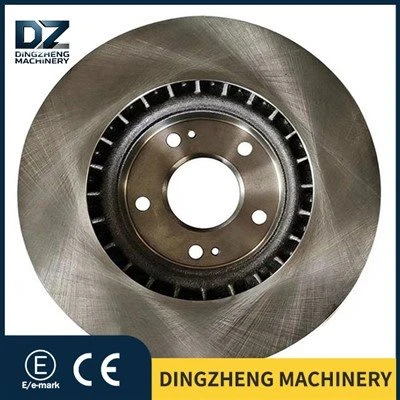
Let’s start with the basics: why Ford Series brake discs aren’t like the cheap, universal rotors you might find at a big-box store. Ford engineers design each disc to match the weight of their specific models—whether it’s a compact Focus that sits around 3,000 pounds or a Super Duty F-350 that tips the scales at over 7,000 pounds. The thickness, ventilation patterns, and surface finish aren’t random; they’re calibrated to handle the heat generated during hard braking, stop-and-go city driving, and heavy towing. That means if you’re swapping rotors on a 2018 Escape, you can’t just grab any generic disc off the shelf. You need a Ford Series disc made for that exact model, and even then, installation steps need to align with Ford’s service guidelines to keep that design working as intended.
First, let’s talk about who should tackle this job on their own. If you’re someone who’s changed oil, replaced wiper blades, or swapped out a tire before, you’ve already got the muscle memory to do most of a brake rotor swap. You’ll need a few specific tools that aren’t fancy—most of them you probably already own or can rent for cheap from a local auto parts store: a lug wrench, a jack and jack stands (critical, never skip jack stands), a c-clamp (at least 2 inches wide), a socket set (13mm, 15mm, and 18mm are common for Ford models), a brake caliper tool or an adjustable wrench, and a wire brush to clean the hub surface. If you’re working on a rear-wheel-drive Ford with a parking brake integrated into the rear caliper, you might also need a caliper wind-back tool to retract the piston—this is a small investment, but many rental places have them for $5 a day.
But here’s the part most first-timers miss: Ford-specific details that trip people up every time. For example, on many newer Ford models, the front brake calipers are held on by two bolts, one of which is often a hex head that can seize up after years of heat and moisture. If you just yank on it without penetrating oil, you might round the bolt head and end up paying a mechanic $150 to fix a $5 bolt. Another Ford quirk: the hub surface that the rotor mounts to. Old rotors leave rust and brake dust buildup, and if you don’t clean that surface before installing the new Ford Series disc, you’ll get what’s called “rotor runout”—that vibration you feel through the steering wheel when you brake. It’s not the rotor being warped; it’s a dirty, uneven fit between the rotor and the hub. I’ve had customers bring back rotors they installed themselves, complaining about vibration, just because they skipped that 10-second cleaning step.
Now, let’s break down the steps for a basic swap, so you can judge your own comfort level. First, park your Ford on a flat, level surface, engage the parking brake, and loosen the lug nuts before you jack the car up. This is a safety must—if you try to loosen lug nuts while the car’s in the air, it can shift and fall. Once the car’s on jack stands (always place them on the frame rails, not the plastic bumper or floor pan), remove the wheel, then remove the caliper bolts. Pro tip: hang the caliper from the frame with a piece of wire—don’t let it hang by the brake hose, that can stretch or damage the hose. Next, pull the old rotor off, clean the hub, slide the new Ford Series disc on, then reverse the steps to put the caliper and wheel back. That’s the high-level view, but for someone who’s never done this, even the “simple” parts can feel overwhelming.
So when is it not a good idea to install your Ford Series brake discs yourself? Let’s say you’re working on a 2021 Ford F-250 Super Duty, which has heavy-duty front rotors that weigh 20 pounds each. The caliper bolts on these are torqued to 150 foot-pounds—way more than the average person can get with a basic socket wrench. If you don’t torque them to the exact spec, the caliper can shift, leading to uneven brake pad wear or, in extreme cases, the caliper coming loose. Another red flag: if your Ford has a solid rear axle with drum brakes that combine with the rotor for parking. Swapping those requires adjusting the star wheel on the drum, which is easy to mess up and can leave your parking brake not working. I once had a customer who installed rear discs on his 2019 Ranger, skipped adjusting the parking brake, and ended up with no brakes at all when he pulled over to take a break on a road trip. That’s not a risk worth taking for most people.
Wait, but what about online tutorials? I see thousands of customers watching YouTube videos every week before they call me, and while many videos are helpful, a lot don’t cover Ford-specific nuances. For example, on 2015-2020 F-150s, the front rotor has a small set screw that holds it to the hub—many generic tutorials skip that, so customers pull and pull on the rotor, thinking it’s stuck, when they just need to loosen a tiny screw. That’s a silly mistake, but it happens all the time. Another common issue: brake pad break-in. Ford requires a 200-mile break-in period for new brake rotors and pads, where you avoid hard stops and gradually work your way up to normal braking. If you install the discs yourself and then drive aggressively right away, you’ll glaze the pads, leading to squealing and poor stopping power. A mechanic will usually remind you of this, but a first-timer might miss it.
As a Ford Series brake disc supplier, I also see the mistakes that come with using the wrong tools. A lot of people use a regular c-clamp to push the brake piston back, but if your Ford has an electronic parking brake (common on newer Focus, Escape, and Explorer models), the piston won’t just push straight back—it needs to be rotated at the same time. If you force a c-clamp on there, you can damage the electronic motor inside the caliper, which costs $800 to replace. That’s a far bigger bill than the $30-$50 you’d save by installing the discs yourself.
Now, let’s get to the middle ground: if you’re willing to do a little extra research, take your time, and follow Ford’s exact service manual steps, you can absolutely do this. I always tell customers who are on the fence to test their skills on just one wheel first. Swap the front driver’s side, see how it goes, and if you don’t run into any seized bolts or stuck rotors, tackle the other three. If you do run into a problem—like a seized caliper bolt—stop, call a friend who has experience, or ask a local auto parts store for help with penetrating oil. There’s no shame in needing a little backup; brake work is one of those jobs where patience beats speed every time.
Another point: warranty. Most Ford Series brake discs come with a limited warranty, but that warranty often requires professional installation to be valid. I’ve had customers who installed rotors themselves, got vibration, tried to claim the warranty, and were denied because the warranty clause says “installation performed by a certified technician.” That’s not a trick—Ford’s warranty is designed to cover defects in parts, not installation errors that a pro would avoid. If you install them yourself and mess up, you’re out both the cost of the discs and the cost of a mechanic to fix it. That’s a $100-$200 mistake that’s easy to avoid.
Let me share a recent story that sums this up for me. A customer from Ohio called last month, upset because he’d installed new Ford Series brake discs on his 2017 Mustang, and now his brakes were squealing. He’d watched a 10-minute YouTube video, skipped cleaning the hub, and didn’t break in the pads properly. I walked him through fixing the hub (we talked him through it over the phone, step by step) and told him about the break-in period. A week later, he called back to say the squealing was gone, and he’d saved $180 by not hiring a mechanic. That’s the win I love to see—when a customer has the skills, takes the time, and does it right. But I also had another customer two months ago who tried to install discs on his 2020 Expedition, rounded three caliper bolts, and ended up paying $300 to a mechanic to fix his mistake instead of saving money.
So to circle back to the original question: Can you install Ford Series brake discs without professional help? The short answer is yes, if you have the right tools, the time to research Ford-specific steps, and the willingness to stop and ask for help if you hit a problem. The longer answer is that for most people, especially if you’re working on a larger Ford like an F-150 or Super Duty, it’s worth the $100-$200 to have a certified technician do it. Brake work isn’t something to cut corners on—your safety depends on it, and Ford’s systems are designed to work best when installed correctly.
If you’re thinking about installing Ford Series brake discs, the first step is to make sure you’re getting the right part for your exact model (we can help confirm that for you, no guesswork needed). The second step is to be honest with yourself about your comfort level with automotive work. If you’ve never worked on brakes before, start small: rent the tools, buy a repair manual for your Ford model, and take it slow. If you run into any issues, don’t hesitate to reach out. We’ve helped hundreds of customers navigate their first rotor swap, from picking the right disc to troubleshooting a stuck bolt or a tricky piston.
At the end of the day, installing brake discs is a doable DIY job, but only if you go into it with your eyes open. It’s not just unbolting old parts and bolting new ones—there are Ford-specific details that make the difference between a smooth, safe stop and a vibration that ruins your highway drive. If you’re ready to move forward, we’re here to make sure you have the right parts and the guidance to do it right, whether that means a DIY installation or having a pro take over.
If you’re interested in purchasing Ford Series brake discs or have questions about installation, feel free to reach out for a consultation. We’re here to help you find the right parts for your Ford, whether you’re a first-time DIYer or a seasoned mechanic.
Brake Discs for HONDA References
- Ford Motor Company. (2022). Ford Service Guidelines: Brake Rotor Installation and Torque Specifications.
- Automotive Aftermarket Industry Association. (2021). DIY Brake Installation Best Practices for Light Duty Trucks and Cars.
- Brake Parts Inc. (2023). Rotor Runout Causes and Solutions for Passenger Vehicles.
Laizhou Dingzheng Machinery Co., Ltd.
As one of the most professional ford series brake discs manufacturers and suppliers in China, we’re featured by quality products and good price. Please rest assured to buy cheap ford series brake discs for sale here from our factory. We also accept customized orders.
Address: Luan Jia village, Tushan town, Laizhou city, Shangdong
E-mail: AMY@cndingzheng.com
WebSite: https://www.dingzhengbrake.com/
