If you run a grain processing, flour milling, or pet food production line, you already know a plansifter isn’t just a box with stacked sieves—it’s the backbone that decides how clean, uniform, and profitable your end product is. Mess up its efficiency, and you’re either tossing half your good material down the drain, letting oversize particles ruin a batch, or wasting hours troubleshooting breakdowns. As a plansifter supplier, I talk to mill owners and production managers every single week who’re guessing at their unit’s performance instead of measuring it properly, and that’s where so much lost time and money comes from. Today, I’m breaking down how to actually test your plansifter efficiency (no fancy lab degree required) and why skipping these steps leaves cash on the table. Plansifter
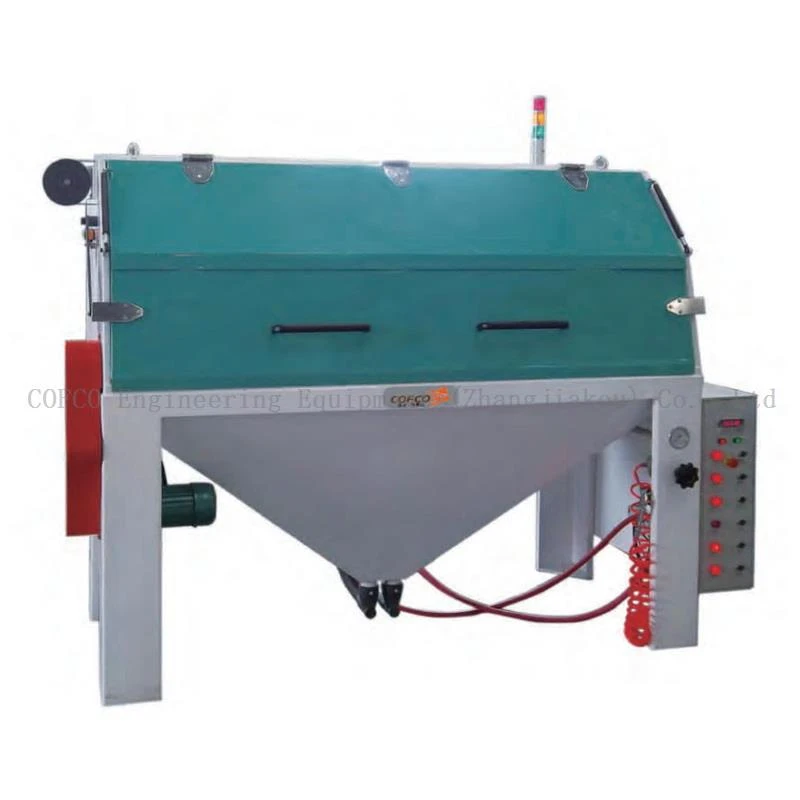
First, let’s cut through the jargon: plansifter efficiency, when we talk in the real world, isn’t some random number pulled out of a manual. It’s how well your machine is separating the particles you want to keep from the ones you don’t. For example, if you’re sifting wheat flour, your goal is to get all particles smaller than 150 microns through the finest sieve, and block all particles bigger than 150 microns from getting through. If 10% of the small stuff gets trapped in the oversize bin, or 8% of the big stuff sneaks into the product bin? That’s wasted material, rework, and unhappy customers. Most people test this wrong—they just grab a sample off the product bin and call it good. That tells you nothing about what’s actually happening inside the sifter.
Let’s start with the basics you need before you even turn on your sample test. I’ve seen folks show up with a random coffee cup full of sample and call it “representative.” Bad move. Your sample has to be equal to the actual material your plansifter is processing that day. If you run soft wheat in the morning and hard wheat in the afternoon, test each separately. Grab your feed material (the stuff going into the plansifter), your “oversize” fraction (the stuff falling through the bottom sieves, ending up in the reject bin), and your “undersize” fraction (the final product you’re keeping). You’ll want a way to measure particle size distribution (PSD)—you can get a simple set of test sieves, a digital scale, and a magnifier for small particles, or even a low-cost online PSD tool if you’re running a high-output line. No need for a $10k lab counter if you’re just starting out.
Now, step one in testing: measure “pass accuracy.” This is the big one. Let’s stick to the flour example. Your target sieve is, say, 150 microns. That means any particle smaller than 150 microns should pass through the sieve, any bigger should stay on top of it. To test this: weigh out 100 grams of your feed material, sift it through a lab set of sieves that matches the exact mesh in your plansifter (don’t guess on mesh size—labeled numbers can be off, so measure sieve opening with a caliper if you can). Split the feed into particles that fit through the 150 micron mesh (call this “good fine material”) and those that don’t (call this “bad coarse material”). Now, repeat this same split on your final product bin. Let’s do the math: if your final product has 95 grams of good fine material and 5 grams of bad coarse material, your pass accuracy (also called separation efficiency for fines) is (grams of good fine in product / total grams of good fine in feed) x 100. That’s your first number. If it’s below 90%? Your plansifter’s not doing its job—you’re tossing 10% of your valuable flour in the reject bin.
Step two: measure “blockage rate.” This is the other side of the coin. If oversize particles are clogging the sieve holes, or your sieve is stretched out from use, small particles get trapped in the oversize bin. That means you’re wasting product you could be selling. Test this the same way: take your reject (oversize) bin material, sift it through your target sieve, and weigh how much of that reject is actually small enough to have passed through. If your reject bin has 12 grams of good fine material, and 100 grams of total reject, your blockage rate is (grams of good fine in reject / total grams of good fine in feed) x 100. Anything over 5% here is a red flag—you’re giving away free product.
Wait, but a lot of people forget that plansifters have multiple decks, right? If your machine has 4 stacked sieves, each doing a different separation, you can’t just test the final product and call it done. Let’s say you’re running a semolina line: first deck separates 800 micron oversize, second separates 400 micron, third separates 200 micron, fourth ends up as fine flour. Test each deck individually. For the second deck (target 400 micron), take the material going into that deck, the material leaving the bottom of that deck, and the material leaving the top of that deck. Calculate pass accuracy for that deck, not just the final output. I’ve seen mill owners replace their entire plansifter assembly because the final product was off, only to find one middle deck was torn and letting oversize particles slip through—something a final product test never would’ve caught.
Now, let’s talk about common mistakes that mess up your test results. First, sample size. If you grab 5 grams of material, that’s not enough. You need at least 500 grams total (split between feed, undersize, oversize) to get a statistically accurate reading. Small samples have too much random variation—one big particle can throw your numbers off entirely. Second, testing at the wrong time. Don’t test first thing in the morning when the machine’s still warming up, or right after a shift change when the flow rate’s inconsistent. Test when your production line is running at steady state—same speed, same material, same settings, for 20 minutes straight. Third, ignoring sieve tension. A plansifter’s sieves have to be tight to work properly. If your test sieves are slack, they’ll let particles pass when they shouldn’t, and your results will look way better than they actually are. I’ve had customers tell me their plansifter’s “efficiency is 98%” only to show up and find their sieves were so loose they’d stretch 10% bigger than labeled. Retensioning the sieves dropped their oversize fine content from 7% to 1% overnight.
Another thing: flow rate. How fast you feed material into the plansifter makes a huge difference. If you’re running 2x the recommended speed, particles don’t have time to separate—they just bounce around and get mixed up. Test at different flow rates to find your sweet spot. For example, one customer of mine was running their plansifter at 15 tons per hour, and their blockage rate was 8%. They dropped it to 10 tons per hour, and blockage went down to 2%—they didn’t have to buy a bigger machine, just adjust their feed rate. That’s the kind of win you catch when you test, not guess.
Now, what if your efficiency numbers are off? What do you do next? First, check your sieve condition. Worn, torn, or clogged sieves are the #1 cause of bad performance. I recommend replacing sieves every 6 months for high-output lines, or whenever you spot holes larger than 10% of the target mesh. Second, check the plansifter’s vibration settings. Plansifters need a specific amount of vibration to keep sieves clear of clogs, but too much vibration will knock small particles into the oversize bin. Third, make sure the plansifter is level. If it’s tilted even 1 degree, material will all run to one side, leaving half the sieves unused. A quick level test and adjusting the machine’s feet can fix a lot of issues.
I know this sounds like a lot, but it’s way simpler than dealing with customer complaints, rework, or wasted product. As someone who’s worked with plansifters for years, I’ve seen mill owners put off testing because they think it’s a hassle, and end up losing thousands of dollars a month. The good news? Testing doesn’t take long—set aside an hour once a month, or after any change in material or flow rate, and you’ll catch issues before they turn into big problems.
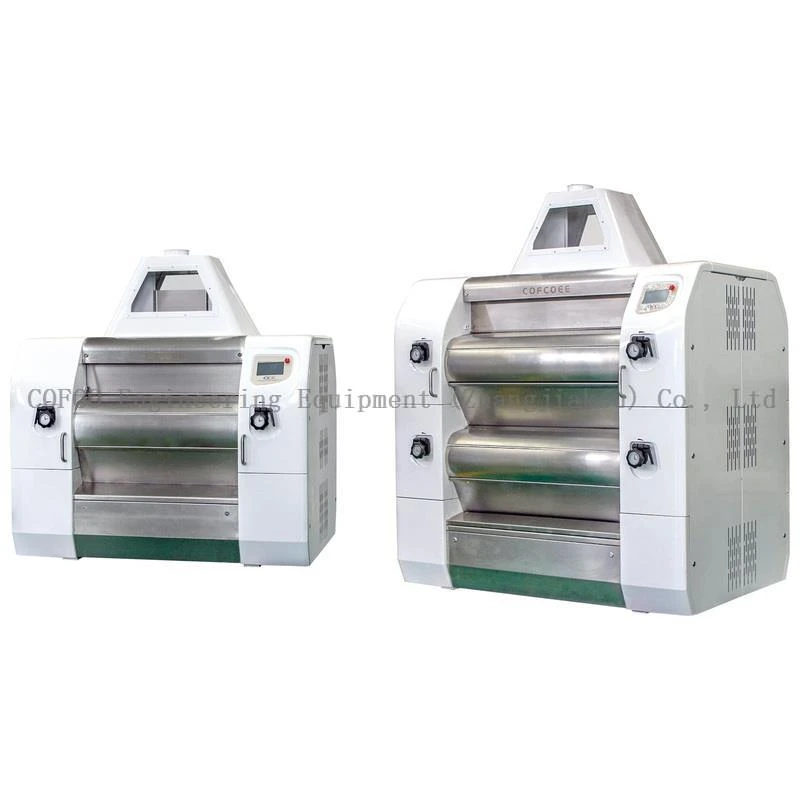
If you’re not sure how to run the test, or you’ve done the test and your efficiency is way lower than it should be, I’m here to help. We’ve worked with dozens of mills to tweak their plansifter settings, replace worn parts, and get their separation efficiency up. No confusing manuals, no hidden fees, just straight talk about how to make your line run smoother and make you more money. Reach out to us to chat through your plansifter needs, whether that’s a quick test walkthrough, new sieves, or a full unit upgrade.
Feed Mixing Equipment References:
- Walker, P. (2019). Particle Separation Efficiency in Industrial Sifting Equipment. Journal of Food Processing Engineering, 42(3), e13572.
- Milling and Grain Technology Association. (2021). Plansifter Operation and Maintenance Manual. Milling Industry Publications.
- Smith, J. et al. (2020). Effect of Flow Rate and Sieve Condition on Plansifter Performance. Transactions of the ASABE, 63(5), 1421-1428.
- European Food Safety Authority. (2018). Particle Size Testing for Food Grain Processing. EFSA Technical Report, 18(12), 1-17.
COFCO Engineering Equipment (Zhangjiakou) Co., Ltd.
COFCO Engineering Equipment (Zhangjiakou) Co., Ltd. is one of the most professional plansifter manufacturers and suppliers in China, also supports customized service. Please feel free to wholesale advanced plansifter for sale here from our factory. Quality products and reasonable price are available.
Address: No.4 ZhongLiang Street, high-tech industrial development zone, Zhangjiakou, Hebei, PRC
E-mail: mayihui@cofco.com
WebSite: https://www.ceeflourmill.com/
