Let’s cut to the chase: if you’ve ever grabbed a brand-new power cable and thought, “Dang, this thing feels like a rigid pool noodle with more copper,” you’re not alone. As a power cable supplier that gets 50+ questions a week on this exact thing, I’ve lost count of how many electricians, IT guys, even weekend DIYers message us asking why their cable isn’t that bendable, “flexy” feel they’re used to. It’s not a defect—most of the time, it’s totally intentional, and it boils down to a few simple, science-backed choices we (and every other cable manufacturer) make. Power Cable

First, let’s break down the basics: a power cable isn’t just a copper wire wrapped in plastic. It’s layers. The core is usually stranded copper (or aluminum, but copper is way more common for consumer/industrial stuff), then there’s an insulation layer, a jacket, and sometimes a shield for interference. The stiffness starts with that copper core—wait, “stranded” might make you think it’s bendable, right? Actually, how those strands are twisted makes a huge difference. Let’s keep it real: if you twist strands too tight, they lock together like a rope that’s been cinched for years. We’re talking about lay length here—basic term, I know, but bear with. Lay length is how far a strand travels to complete one full twist around the cable’s axis. Short lay length = tight twists, which make the core way stiffer. Long lay length = loose twists, which let each strand move independently. But here’s the catch: short lay is more durable. It resists kinks better, handles more tension when you pull it through walls or under floors. So if you’re buying a cable for, say, industrial machinery that gets yanked around a warehouse, we’re not gonna do long lay—we’re gonna prioritize toughness, which makes the cable stiff.
Next up: insulation and jacket materials. This is the big one people never guess. Most consumer cables use PVC (polyvinyl chloride) because it’s cheap, flame-resistant, and holds up to heat. But not all PVC is the same. Rigid PVC (the stuff used for plumbing pipes) is obvious, but even the “flexible” PVC for cables has different plasticizer levels. Plasticizers are the additives that make plastic bendable—no plasticizer, and PVC is rock hard. But wait, too much plasticizer, and the cable will get soft and gummy in warm weather, plus it wears out way faster. So we have to balance it. Industrial cables, for example, use PVC with low to medium plasticizers because they need to hold their shape, resist oil or chemicals, and last 10+ years outdoors. That low plasticizer content = stiffer cable. If you want super-flexy stuff, like the cables you use for laptop chargers or phone cords, they use PVC with way more plasticizer, or even thermoplastic elastomer (TPE), which is way more bendable. TPE is pricier, though, so we don’t use it for bulk industrial orders. That’s why your warehouse cable is stiff, and your phone charger is bendy.
Then there’s the size of the cable itself. Thicker cables are just stiffer, period. I don’t care if you use a fancy TPE jacket— a 4/0 power cable (that’s big, like for a 200A generator) is gonna feel rigid. It has way more copper, way more insulation, so all that extra material adds up. Think of it like a straw vs. a pipe: a thin plastic straw bends easy, a 2-inch PVC pipe doesn’t. Same logic applies here. We have to use thick cables for high wattage, right? If you’re running power to a 500-amp motor, you can’t use a flimsy small cable—it would overheat, lose power, and pose a fire risk. So that thickness = stiffness, and it’s non-negotiable for performance.
Wait, what about when the cable gets cold? Oh, that’s another thing. Plastic (even the flexible stuff) gets stiffer in low temps. If you’ve ever grabbed a cable in winter that feels stiff, then it warms up a bit and becomes more bendable, that’s normal chemistry. Polymer molecules slow down when it’s cold, so they don’t move as much, making the whole cable feel rigid. Once it heats up, the molecules loosen, and the bend comes back. That’s not a defect either—just physics.
Now, let’s address the elephant in the room: sometimes people think a stiff cable is a bad sign. I get it—if I unbox a $50 industrial cable and it’s stiffer than a 2×4, I might second-guess it. But here’s the tea: stiffness isn’t always a flaw. It’s a feature. A stiff cable is easier to route in straight lines without kinking, it doesn’t bend on its own and get damaged, and it handles tension way better than a flexible one. I once had a customer who complained his cable was too stiff, turned out he was using a 100ft 10AWG cable to power a workshop fan, and he was trying to wrap it around a pipe. Once he routed it straight, he realized the stiffness made it way less likely to get frayed or short out.
That said, if you’re dealing with a cable that’s way stiffer than it should be—like a new flex cable that’s hard to bend at room temp—there might be a small issue. Maybe the plasticizer was mixed wrong during manufacturing, or there’s a defect in the stranding. But 9 times out of 10, stiffness is just part of the design for the job the cable’s supposed to do.
As a power cable supplier, I see this all the time. We get emails like, “My cable is so stiff I can’t pull it through conduit—can you send me a different one?” And 80% of the time, the answer is, “Try a smaller gauge, or a flex-rated cable.” For example, our SOOW cable is a workhorse for construction, but it’s stiffer than our SJEOOW flexible cord, which is meant for portable tools. We make both because different jobs need different things.
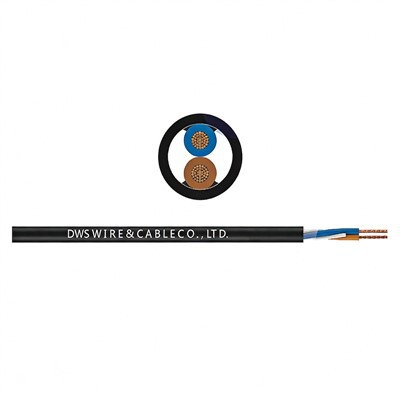
Let me wrap this up for anyone still sitting there going, “Okay, so when do I want a stiff cable vs. a bendy one?” If you’re running permanent wiring in walls, powering heavy industrial equipment, or installing a generator, a stiffer cable is better—it’s more durable, less likely to get damaged during installation, and safer for high-power use. If you’re making a phone charger, a lamp cord, or a portable tool that gets moved around a lot, you want a bendy cable, and we can adjust materials and stranding to make that happen.
Coaxial Cable I know this stuff can feel boring, but it’s why we don’t just sell “cables”—we build them for specific uses. Next time you grab a stiff power cable, don’t write it off as poorly made—think of it as engineering doing its job. If you’re not sure what cable you need, or you’re dealing with one that’s way too stiff for your project, hit us up. We’re here to help you pick the right one for the job, no jargon, no hassle.
References
- International Electrotechnical Commission (IEC) 60227, Polyvinyl chloride insulated cables of rated voltages up to and including 450/750 V, 2020
- Underwriters Laboratories (UL) 62, Standard for Safety for Flexible Cords and Cables, 2021
- ASTM D1204, Standard Test Method for Dimensional Change of Flexible Thermoplastic Materials in Elevated Temperatures, 2018
- Power Cable Technology: Design, Materials, and Performance, C.L. Bell, CRC Press, 2019
Cixi Davos Wire & Cable Co., Ltd.
As one of the most professional power cable manufacturers and suppliers in China, we also support customized service. Please feel free to buy bulk high quality power cable in stock here from our factory. For price consultation, contact us.
Address: No.3, Lane 91, Ruan Ding Road, Linxi Village, Xiaolin Town, Cixi City
E-mail: roy798@163.com
WebSite: https://www.cj-supplychain.com/
