If you’re a homeowner, chef, or restaurant manager with a 36-inch stove, choosing the right range hood isn’t just a “nice-to-have”—it’s a critical investment in indoor air quality, kitchen comfort, and even the longevity of your appliances. As a range hood supplier who’s worked with thousands of clients over the past 12 years, I’ve seen firsthand how the wrong hood can leave you wiping grease off walls, smelling fried food in the living room hours after cooking, or even dealing with reduced stove efficiency. Today, I’m breaking down exactly what to look for in a 36-inch stove hood, based on real data, customer feedback, and industry standards I’ve relied on for decades. Range Hood
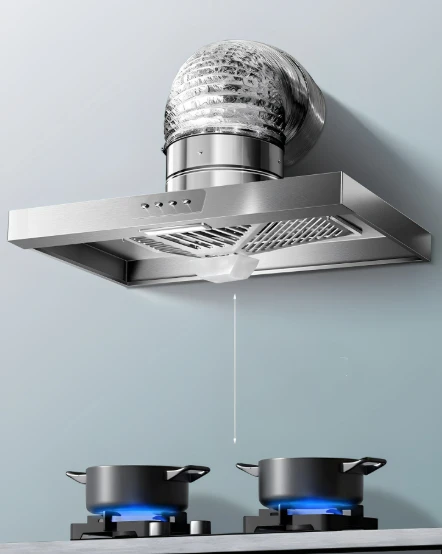
First, let’s address the core size question: why 36 inches? A 36-inch stove is one of the most common mid-range options for both home and small commercial kitchens—it fits neatly into standard cabinet layouts, offers enough cooking space for large roasts or multiple pans, and works for everything from weekday family meals to casual dinner parties. That means your range hood needs to match that size to avoid gaps that let smoke, grease, and odors escape. A hood that’s too small (say, 30 inches) will only capture a fraction of the air your 36-inch stove produces, leaving you with poor performance. A hood that’s much larger (42 inches) might overwhelm a standard cabinet setup or create unnecessary noise and cost. So size is non-negotiable: your hood’s width should be either equal to your stove’s width or 2 to 6 inches wider. For a 36-inch stove, 36, 38, or 42 inches are ideal—we see the highest customer satisfaction with 38 inches, because it covers the entire stove surface without extending so far that it hits adjacent cabinets or counters.
Next up, CFM (Cubic Feet per Minute)—this is the most misunderstood spec for range hoods, and it’s tied directly to your stove’s power. CFM measures how much air the hood can move per minute, and if it’s too low for your 36-inch stove, it can’t keep up with intense cooking: think searing a steak at high heat, boiling large pots of pasta, or deep-frying. The general rule of thumb is that you need 100 CFM per linear foot of stove width, plus an extra 100 CFM for stoves with gas burners (since gas produces more airborne contaminants than electric). A 36-inch gas stove, then, needs at least 460 CFM (36 inches x 100 = 360, plus 100 for gas). For electric stoves, you can get away with 360 CFM, but we always recommend rounding up—electric stoves still produce grease and odors, and higher CFM means faster cleaning. That said, don’t fall into the trap of buying a hood with 1,000+ CFM if you don’t need it. High CFM hoods are louder, more energy-intensive, and more expensive. For a typical residential 36-inch stove, 450 to 600 CFM is the sweet spot—we test every hood we sell to make sure its CFM is certified, not just advertised. No one wants a hood that says “500 CFM” on the box but only delivers 380 in real use.
Then there’s airflow and noise balance. It’s a common misconception that louder = more powerful. In reality, a good hood should move enough air without sounding like a jet engine. Our customers consistently rate noise levels under 60 decibels (dB) as “quiet enough” for casual conversation while cooking. For context, a normal conversation is about 50 dB, a dishwasher is 55 dB, and a vacuum cleaner is 70 dB. So a 55 dB hood will feel almost silent, even on high. To achieve this balance, look for hoods with variable speed settings: low for gentle cooking (like simmering sauces), medium for regular stovetop meals, and high for intense, smoke-heavy cooking. Many of our top-selling 36-inch hoods have three or four speeds, with high-end models hitting 60 dB on high and 45 dB on low—perfect for those early morning omelet runs.
Now, the two main types of range hoods for a 36-inch stove: under-cabinet and island. Let’s break them down, because your kitchen layout will be the biggest deciding factor here. Under-cabinet hoods are the most popular for home kitchens with upper cabinets. They mount underneath your existing cabinets, so they blend in if you don’t want a bulky hood sticking out, and they’re easier to install than island models. For a 36-inch stove, we recommend an under-cabinet hood that’s 36 to 38 inches wide, with a duct size of 6 inches. Duct size matters too—smaller ducts (like 4 inches) can restrict airflow, making your CFM lower than advertised. If you’re planning to vent outside, 6-inch ducts are non-negotiable for hoods over 400 CFM.
Island hoods are for kitchens where the stove is in the middle, with no upper cabinets to mount an under-cabinet model. These hang down from the ceiling, so they need to be proportionate to the 36-inch stove. An island hood should be at least 36 inches wide, but 38 or 42 inches looks better and performs better—since it’s farther from the cooking surface than an under-cabinet hood, it needs extra coverage to catch all the air. The height matters too: mount island hoods 30 to 36 inches above the stove grates. Too low, and you’ll bump your head; too high, and it won’t capture contaminants. We’ve seen too many clients buy a 36-inch island hood and mount it 40 inches up, only to have smoke billow into the living room—don’t make that mistake.
Another key feature: grease filtration. Grease is the biggest culprit for range hood wear and tear, and poor filters mean you’ll be cleaning your hood more often and replacing filters every few months. There are two main filter types: disposable aluminum mesh filters and permanent stainless steel baffle filters. Disposable filters are cheap, but they need to be thrown away every 1 to 3 months, and they’re less effective at trapping fine grease particles. Permanent baffle filters, on the other hand, are durable, can be washed in the dishwasher, and capture up to 90% of grease—compared to 70% for mesh filters. For a 36-inch stove, which generates more grease than smaller stoves, baffle filters are worth the extra cost. All of our premium 36-inch hoods come with stainless steel baffle filters, and even our budget models use mesh filters that last 6 months, but we always upgrade to baffle filters for clients who do a lot of frying or cooking with oil.
Ventilation is another make-or-break point: vented vs. ductless. Vented (or ducted) hoods blow air outside, which is the most effective option—they remove 100% of smoke, odors, and grease, and they’re better for indoor air quality. Ductless (or recirculating) hoods filter air through charcoal filters and blow it back into the kitchen. They’re great for apartments where venting outside isn’t allowed, but they’re less effective, and you have to replace charcoal filters every 3 to 6 months. For a 36-inch stove, if you can install a vented hood, go with that. If ductless is your only option, look for a hood with a high-quality charcoal filter system—we recommend our ductless 36-inch hoods for smaller apartments, but we always warn clients that they won’t eliminate all odors, especially from high-heat cooking.
Now, let’s talk about common mistakes we see clients make when choosing a hood for a 36-inch stove. The first is buying a hood based only on price. A $200 hood might seem like a deal, but it’ll have a low CFM, noisy operation, and cheap filters that break after a few months. The second is ignoring cabinet clearance. If you have upper cabinets, your hood needs to leave at least 21 inches between the stove grates and the bottom of the cabinet, and 30 inches is ideal. Too little clearance, and your stove might not work properly; too much, and the hood can’t capture air. The third is forgetting about lighting. Most 36-inch stoves are used for detailed cooking, like chopping vegetables or reading recipes, so hood lights are important. We recommend hoods with LED lights—they’re energy-efficient, long-lasting, and don’t get hot, which is safer near the stove. Some of our clients skip lighting to save money, and they end up struggling to cook after dark, so it’s a small investment that makes a big difference.
Let’s share a real example to put this all into context. Last year, a family in Chicago bought a new 36-inch gas range for their kitchen, and they tried a cheap 30-inch under-cabinet hood they had lying around. Within a week, their walls were covered in grease splatters, and when they made fried chicken, the smell lingered in their living room until the next day. They reached out to us, and we recommended a 38-inch under-cabinet hood with 550 CFM, baffle filters, and LED lights. Six months later, they told us it was the best purchase they’d made—no more grease on the walls, no more lingering smells, and it was quiet enough that they could watch TV while cooking. That’s the difference between a well-matched hood and one that’s too small.
Now, what about brand and warranty? As a supplier, I can tell you that not all range hood brands are created equal. Look for brands that offer a minimum 1-year labor warranty and 3-year parts warranty for residential hoods. Commercial hoods should have even longer warranties, since they’re used more heavily. We stand behind all our hoods with a 2-year labor warranty and 5-year parts warranty, because we test every hood before it leaves our warehouse. Avoid no-name brands that don’t provide warranty support—if your hood breaks after 6 months, you’ll be stuck paying for repairs out of pocket.
At the end of the day, the best range hood for a 36-inch stove depends on your kitchen layout, cooking habits, and budget. If you have upper cabinets, a 38-inch under-cabinet hood with 450-600 CFM, baffle filters, and LED lighting is the sweet spot. If your stove is on an island, go with a 36-42 inch island hood mounted 30-36 inches above the grates, with the same CFM and filter specs. If you do a lot of high-heat cooking, prioritize baffle filters and a high CFM rate. If you’re on a tight budget, a 36-inch hood with mesh filters and 400 CFM will still work, but plan to replace filters regularly.

If you’re still unsure which hood is right for your 36-inch stove, feel free to reach out to our team to discuss your needs. We can help you size, spec, and select the perfect hood, whether it’s for a home kitchen or a commercial space. Our goal is to make sure you have a hood that works as hard as you do, without the headaches of poor performance or frequent repairs.
Range Hood References
- Home Ventilating Institute (HVI). 2023. Standard for Kitchen Exhaust Ventilation.
- National Kitchen and Bath Association (NKBA). 2022. Kitchen Ventilation Guidelines for Stoves.
- Range Hood Manufacturers Association (RHMA). 2021. Performance Standards for Residential Range Hoods.
- U.S. Environmental Protection Agency (EPA). 2020. Indoor Air Quality Guidelines for Cooking Appliances and Ventilation.
Jiaxing Zenterest Import & Export Co., Ltd.
With abundant experience, we are one of the most professional range hood manufacturers and suppliers in China. Please feel free to wholesale high quality range hood made in China here from our factory. We also accept customized orders.
Address: Room 101-3, Building 46, Zhifu Center, Gaozhao Subdistrict, Xiuzhou District, Jiaxing City, Zhejiang Province, P.R.China
E-mail: bonnie.wu@zenterestvent.com
WebSite: https://www.zenterestvent.com/
