Hey everyone, I’m Alex, and if you’ve landed here, chances are you’re either working with PET thermoformed felt materials right now, or curious about how we as a supplier think through common questions for our clients. One question that pops up all the time in our inbox, at trade shows, and even in follow-up calls with folks who’ve ordered samples, is this: Can PET thermoformed felt be laminated? PET Thermoformed Felt Materials
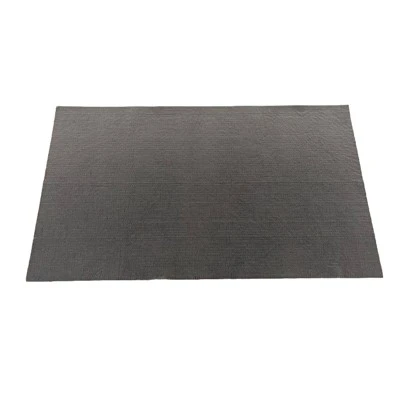
If you’re not super deep in the manufacturing world, let’s break this down first. PET thermoformed felt is basically a versatile material we make by shaping PET (polyethylene terephthalate) felt—its thermoplastic, so it can be heated and molded into rigid or semi-rigid forms, perfect for things like automotive interior components, acoustic insulation panels, packaging inserts, or even protective padding for electronics. Laminating, on the other hand, is just bonding two or more layers of material together with an adhesive, heat, pressure, or a mix of all three, to make a product that’s stronger, more functional, or looks a specific way.
For years, people wrote off PET felt as too porous, too soft, or too heat-sensitive to laminate well. But that’s outdated—we’ve tested hundreds of combinations here at our facility, and we’re constantly adjusting our materials and processes to make lamination work for almost every client’s needs. Let’s get into the nitty-gritty of why it works, what works best, and what to watch out for so you don’t waste time or materials on a bad approach.
First, let’s start with the basics of our PET thermoformed felt: it’s made from 100% recycled PET fibers, right? We needle-punch and thermoform it at low temperatures (usually between 120°C and 160°C, way lower than the melting point of PET itself, which is around 250°C) to keep its structure intact. That low-heat processing is key here, because it means the felt never gets damaged during shaping, so its fiber structure stays consistent. Consistent fibers are huge for lamination—if a material has frayed, uneven fibers, the adhesive won’t bond evenly, leading to bubbles or delamination down the line.
We’ve found that the biggest myth people have is that porous materials can’t be laminated. Porosity is actually a superpower here. When you apply an adhesive, it can seep into the tiny gaps between the PET fibers, creating a mechanical bond—think of it like Velcro, but way stronger—instead of just a weak surface-level stick. That’s way more durable than bonding two smooth, non-porous materials, which often rely purely on chemical adhesion that can break over time, especially with temperature changes or vibration.
But not all lamination methods work the same, and that’s where most clients go wrong. Let’s talk about the ones that have worked for us, and the ones to avoid.
First, hot melt adhesives (HMAs) are our go-to for almost all PET thermoformed felt lamination. They’re cheap, fast, and easy to apply, and they work perfectly with our PET felt. We use two types most often: ethylene-vinyl acetate (EVA) HMAs and polyolefin (PO) HMAs. EVA is great for general use—bonding to fabrics, foils, or even rigid plastics—and it has a soft flex, so it doesn’t crack if the thermoformed felt is bent or shaped later. PO HMAs are better for high-heat environments, like automotive engine compartments, because they can handle temperatures up to 80°C without melting. The key here is to use a low-tack HMA for felt, not the thick, industrial ones made for rigid materials. Thick HMAs can seep too far into the felt, making it stiff and ruining its insulation or cushioning properties. We always recommend a 20-30 gsm coat weight—just enough to get a good bond, not so much that it clogs the fibers.
Then there’s adhesive lamination, where you use a liquid adhesive instead of a hot melt. We use this when clients need the lamination to be extra strong, like for packaging inserts that hold heavy electronics. Water-based acrylic adhesives work best here because they’re non-toxic, don’t smell, and bond really well to PET fibers. We’ve tested them with polyester films, aluminum foils, and even other PET felt layers, and they hold up way better than hot melts for long-term use, especially if the product will be exposed to moisture. The downside is that they take longer to dry, so the production line has to be adjusted to give them time to cure—something most our clients can handle with just a small tweak to their process.
What about reactive lamination, where you use an adhesive that cures with moisture or heat? We don’t usually recommend this for PET thermoformed felt, because it requires high pressure and heat that can damage the thermoformed shape. If you’re making a thin, flat felt panel, it might work, but for the molded, 3D shapes we supply (like curved automotive door panels or custom packaging trays), reactive lamination can warp the form, which is a total waste.
Now, what materials do people laminate our PET thermoformed felt with? We’ve done everything from basic things like cotton fabric and paper to more specialized stuff like copper foil, silicone rubber, and even carbon fiber. The most popular combo, by far, is laminating PET felt to a decorative fabric for automotive interiors. Clients love it because it’s soft, quiet, and looks way nicer than hard plastic panels. We also work with clients who laminate felt to aluminum foil for insulation panels—the foil reflects heat, and the felt adds cushioning and soundproofing, making it perfect for appliances or HVAC systems.
But here’s the part no one talks about: what makes lamination work for your specific project? It all comes down to two things: your end use, and the thermoformed felt itself. We don’t just supply a one-size-fits-all PET felt—we make different grades, some with denser fibers, some with looser fibers, some with a smooth top layer. If you’re laminating for high-temperature use, we make a high-density felt that can handle more heat without breaking down, so the adhesive bond stays intact. If you’re laminating for a soft, flexible product, we use a looser fiber felt that lets the adhesive seep in without making the felt stiff.
A common mistake we see new clients make is ordering a generic PET felt from a big supplier, then trying to laminate it themselves, and it not working. That’s because generic felt might have inconsistent fibers, or it might be thermoformed at too high a heat, which melts the surface fibers and makes it too smooth for adhesive to grip. Our felt is made specifically for thermoforming, so the fiber structure is uniform, which means the lamination bond is strong every single time.
We also test every batch before shipping to make sure it’s lamination-ready. Last year, we had a client who ordered felt for acoustic panels, and they wanted to laminate it to a vinyl layer. They tried using a regular HMA and it didn’t work—we sent over a sample of our denser fiber felt, and they used a low-temperature EVA HMA, and it held perfectly. The difference was just the felt’s density and the right adhesive match—something a generic supplier wouldn’t have told them to check.
What about durability? We get asked all the time: will the laminate hold if the product is bent, or exposed to moisture, or dropped? For most of our clients, yes—we do accelerated aging tests in our facility, where we heat laminates to 80°C for 100 hours, or soak them in water for 72 hours, and the bond never delaminates. For extreme use cases, like products that will be exposed to chemicals, we have a special chemical-resistant PET felt that works with specialty adhesives to hold up even in harsh environments.
Now, let’s talk about what doesn’t work. You can’t laminate PET felt with a pressure-sensitive adhesive (PSA) that’s made for paper or vinyl. PSAs are too sticky on the surface, and they don’t seep into the felt, so they just peel off easily. You also can’t use high-temperature thermoplastic adhesives that require melting at over 200°C—they’ll melt the PET fibers in the felt, ruining its structure. And if you have a super thin, low-density felt, laminating might not work as well because the fibers are too fragile to hold the adhesive bond. That’s why we always work with clients to pick the right felt grade for their lamination project, not just the cheapest one.
Wait, let’s also cover a use case that’s super relevant right now: sustainable laminates. A lot of our clients are trying to cut down on plastic, so they want to laminate our PET felt to recycled materials, like recycled cotton fabric or recycled polyester film. That’s totally possible—we even have a line of 100% recycled PET felt that laminates to recycled materials, making the whole product recyclable at the end of its life. That’s a big selling point for a lot of brands right now, as consumers are more aware of plastic waste.
So, to circle back to the original question: Can PET thermoformed felt be laminated? Short answer: Absolutely—if you use the right combination of felt grade, adhesive, and lamination method. It’s not a one-size-fits-all process, but with the right tweaks, you can get a strong, durable bond that works for almost any project.
We’ve been supplying PET thermoformed felt materials for over 10 years now, and lamination is one of the most requested modifications our clients ask for. We don’t just sell you a material and leave you to figure it out—we work with you every step of the way: send test samples, help you pick the right adhesive, adjust the felt grade if needed, even run small-scale lamination tests in our facility to make sure it works before you place a big order.

If you’re working on a project and you’re not sure if lamination will work, or you’re tired of dealing with weak bonds or warped thermoformed parts, hit us up to connect with our team. We’ll walk you through the best options, answer any questions, and send over free samples to test in your own facility. No hard sells, just honest advice based on what’s worked for hundreds of our clients over the years.
Single Component Acoustic Insulation Materials References:
- Polyethylene Terephthalate (PET) Properties and Applications, Plastics Technology Association, 2022
- Lamination Techniques for Porous Textile Materials, Journal of Industrial Textiles, Vol. 50, No. 3, 2021
- Automotive Interior Material Bonding Guidelines, Society of Automotive Engineers (SAE) International, 2020
- Recycled PET Felt Manufacturing and Lamination Standards, Sustainable Textiles Council, 2023
Jiangsu Haokai Automotive Parts Co., Ltd.
As one of the most professional pet thermoformed felt materials manufacturers and suppliers in China, we also support customized service. We warmly welcome you to wholesale bulk pet thermoformed felt materials from our factory. If you have any enquiry about quotation, please feel free to email us.
Address: No. 2 Kangyuan South Road, Xiayuan Town, Rugao City, Nantong City
E-mail: jshk2026@163.com
WebSite: https://www.haokaiauto.com/
