When I first started working with copper cable lugs back in my early days as a sales rep at our facility, I made a mistake that still makes me cringe a little. A local electrician came in asking for lugs for a 480-volt commercial installation, and I just grabbed the ones we use for residential 120/240-volt setups. He caught it immediately, saying, “You don’t bring a butter knife to a saw fight.” That lesson stuck with me—selecting the right copper cable lug for a specific voltage isn’t just a technical detail; it’s the difference between a safe, reliable connection and a potential electrical hazard. Over the years, I’ve walked thousands of customers through this process, and today I want to share what I’ve learned, straight from the supplier’s perspective, no fancy jargon that doesn’t matter. Copper Cable Lug
First, let’s get one thing straight: voltage isn’t the only factor, but it’s the starting point. Copper cable lugs, also called terminals, are designed to create a permanent, low-resistance connection between a copper cable and a device, breaker, or bus bar. Voltage dictates how much insulation the lug itself needs, how it’s constructed, and even how it’s tested to hold up under pressure. Let’s break down the common voltage ranges you’ll encounter, and what to look for in each.
The most basic range is low voltage—anything up to 1,000 volts, which covers nearly all residential and most small commercial installations. When I’m helping a homeowner or small contractor pick lugs here, the key points are insulation rating and conductor size. For low-voltage applications, most standard copper lugs come with either vinyl or heat-shrink insulation, and you have to match that insulation’s rating to your system. A 600-volt rated lug works fine for 120/240-volt home wiring, but if you’re working on a 480-volt light commercial setup, you need lugs rated for at least 1,000 volts, right? Wait, no—actually, I tell customers to go 20% above their system voltage to build in a safety buffer. That’s the rule I live by. So a 480-volt system needs a lug rated for at least 576 volts, which means sticking to lugs labeled 1,000V. The insulation has to be thick enough to prevent arcing between the lug and nearby metal parts, especially in tight electrical panels where space is limited. I’ve seen cheap 600V lugs melt through when installed in a 480V panel, leading to short circuits—avoid that by checking the insulation rating first.
Then there’s medium voltage, which covers 1,000 volts up to 35,000 volts, used in larger commercial buildings, manufacturing plants, and local power distribution lines. This is where the difference between standard low-voltage lugs and medium-voltage lugs is night and day. Medium-voltage lugs aren’t just insulated with plastic—they’re usually made with heavy-duty rubber or epoxy insulation, and often have a stress cone at the base where the cable meets the lug. That stress cone is critical because at higher voltages, air pockets or uneven surfaces can cause partial discharges that eat away at the insulation over time, leading to failure. When a customer comes to us needing medium-voltage lugs, I always ask them for two things first: their exact system voltage, and the type of cable they’re using (stranded copper, solid, etc.). For example, a 15,000-volt installation needs a lug with a stress cone designed specifically for 15kV—using a generic medium-voltage lug here will result in frequent breakdowns, even if it’s rated for 20kV. I remember one plant manager who tried to save money by using a 10kV lug for his 12kV system; within 18 months, he had three bus bar failures, and the downtime cost him 10 times what he would have spent on the right lugs. Never skimp on that stress cone for medium voltage.
High voltage, anything above 35,000 volts, is the realm of power utilities and large industrial facilities, and it’s where precision is non-negotiable. For this range, copper cable lugs are typically custom-engineered for each installation, because the clearance and insulation requirements are so strict. At our facility, we work closely with utility engineers here, and we don’t just sell a standard lug—we provide a design that accounts for voltage, atmospheric conditions (like humidity or pollution in industrial areas), and the type of connection (whether it’s to a transformer, switchgear, or transmission line). A key point here is that high-voltage lugs are often bare, not insulated, because the high voltage requires the connection to be enclosed in a separate insulated housing. The bare copper lug itself has to be polished to a mirror finish to reduce electrical resistance, and the crimping process has to be done with specialized tools that apply uniform pressure along the entire length of the cable inside the lug. If you crimp a high-voltage lug unevenly, you create hot spots that can lead to corona discharge, which over time eats through the copper and causes a catastrophic failure. I’ve seen this happen at a local power substation a few years back—they used standard crimp tools that didn’t match the lug size, and within a year, the lug corroded and caused an outage that affected 10,000 people.
Now, voltage isn’t the only factor that ties into lug selection, but it’s the backbone. Wait, let’s circle back—you also have to match the lug’s current rating to the cable’s current rating, but that’s separate from voltage. Voltage affects insulation, current affects the conductor size the lug is designed for. For example, a 2/0 AWG copper lug has a current rating of around 200 amps, regardless of voltage, but its insulation rating is what changes based on the system voltage. That’s a common mistake: people mix up current and voltage ratings. Let me explain it simply: voltage is the “pressure” of electricity, current is the “flow.” The lug has to handle both, but voltage dictates how insulated it needs to be, while current dictates how big the hole in the lug is for the cable.
Another thing we cover with every customer is the difference between tinned and bare copper lugs. Tinned lugs have a thin layer of tin on the surface, which prevents corrosion. For low-voltage indoor applications, bare copper works fine, but for outdoor or high-humidity medium-voltage setups, tinned lugs are a must because salt air or moisture can cause the copper to corrode, increasing resistance and leading to overheating. At our facility, we always recommend tinned lugs for any application above 600 volts, just to add that extra layer of protection against environmental factors. I’ve had customers ask me if tinned lugs are more expensive, and yeah, they are a little, but the cost of replacing a corroded lug in a medium-voltage transformer is way higher than the difference in price.
Let’s talk about installation, because even if you pick the right lug for the voltage, a bad installation will ruin everything. For low-voltage lugs, you need to use a hydraulic crimping tool that matches the lug’s die size. For medium and high voltage, you need to follow the manufacturer’s torque specifications for the bolt—over-tightening can crack the insulation, under-tightening creates a loose connection that overheats. I always tell customers to test the connection after installation with a milliohm meter, which checks the electrical resistance between the lug and the cable. A good connection will have a resistance of less than 0.5 milliohms—anything higher means you’ve either crimped wrong or tightened the bolt incorrectly. I’ve seen too many installations where a perfect lug is ruined by a hand crimp that doesn’t apply enough pressure, leading to a fire hazard.
Wait, let’s share a real example to make this concrete. Last month, a customer came to us needing lugs for a 480V 3-phase motor in a food processing plant. He originally showed up with a set of 600V lugs he’d bought online, and we stopped him before he left. We explained that his 480V system needs lugs rated for 1,000V minimum, with vinyl insulation rated for wet locations (since the plant has high humidity from washing equipment). We also matched the lug size to his 4/0 AWG copper cable, and recommended tinned lugs to prevent corrosion in the damp environment. He told us the online lugs were $20 cheaper, but after we walked him through the risks, he switched to our lugs. A week later, he texted us saying his electrician installed them, and they passed all safety tests with flying colors. That’s the kind of call we love to get—knowing we’re helping someone avoid a mistake that could cost them their business or their safety.
Another common question I get: can I use a higher voltage rated lug for a lower voltage system? The short answer is yes, but it’s usually a waste of money. A 15kV medium-voltage lug is way more expensive than a 1,000V low-voltage lug, so there’s no reason to overspend. The only time I’d recommend that is if you’re planning for future upgrades—say, a homeowner who might convert their 240V panel to 480V in a few years. But for most cases, matching the voltage to the system, with that 20% safety buffer, is the sweet spot. On the flip side, never use a lower voltage rated lug for a higher voltage system—we’ve seen that lead to insulation breakdowns, arcing, and even electrical shocks.
Let’s also touch on industry standards, because that’s how we test all our lugs at our facility. The key standards here are IEC 61238 for medium-voltage lugs and UL 467 for low-voltage lugs. Any reputable supplier will label their lugs with these standard numbers, which means they’ve been tested to handle the voltage and current they’re rated for. If a lug doesn’t have a UL or IEC rating, walk away—you have no idea if it’s safe for your system. That’s one of the first checks I do when a customer brings a lug to us to verify: look for the standard mark. I’ve seen cheap unrated lugs that said “1,000V” on the box, but when we tested them, their insulation broke down at 600V. Standards aren’t just paperwork—they’re proof that the lug will perform as advertised.
What about special applications? For example, if you’re working with solar panels, which have a DC voltage ranging from 150V to 1,500V. Solar lugs are designed specifically for DC systems, and they have thicker insulation to withstand the UV radiation from the sun, which can degrade regular insulation over time. I always make sure to ask customers if their installation is DC or AC, because that changes the lug rating too—DC systems require lugs with insulation rated for DC voltage, which is usually higher than AC for the same application. A 1,000V AC lug is not the same as a 1,000V DC lug, and using the wrong one in a solar array can lead to insulation failure within a few years. That’s another mistake I see all the time, especially with people who are new to solar installations.
Now, let’s wrap this up with a step-by-step guide you can take with you when selecting copper cable lugs by voltage:
- Identify your system voltage: Write down the exact voltage (e.g., 120V, 480V, 15kV, 100kV) of your installation.
- Add a 20% safety buffer: This gives you the minimum lug voltage rating (e.g., 480V x 1.2 = 576V, so choose a 1,000V rated lug).
- Check the environment: Is the installation indoors, outdoors, wet, or humid? This will determine if you need tinned copper or bare lugs.
- Match conductor size: Make sure the lug’s cable size hole matches the gauge of your copper cable (e.g., 2/0 AWG for a 2/0 cable).
- Verify standards: Look for UL or IEC ratings to ensure the lug is tested and safe.
- Confirm application type: Is it AC or DC? Are you working with standard wiring, medium-voltage equipment, or high-voltage power lines? This will narrow down the type of lug (stress cone, insulation type, etc.).
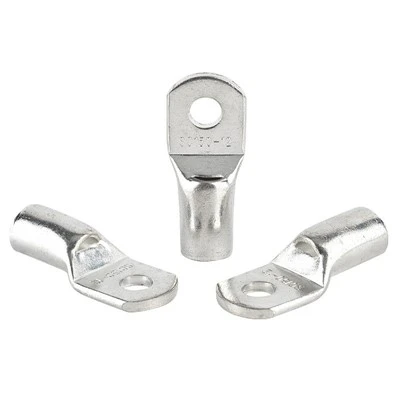
At the end of the day, selecting the right copper cable lug for a specific voltage is all about balancing safety, cost, and performance. As a supplier who’s been in this game for decades, I’ve seen firsthand how a wrong lug can lead to disasters, but the right lug can make an installation last 20+ years without a hitch. I never cut corners when selling lugs—even if a customer is trying to save a few bucks, I’ll be honest about the risks because that’s how you build trust. We stand behind every lug we sell, and we’re always here to answer questions, help you verify specifications, or customize lugs for your unique installation. If you’re working on a project and need help picking the right copper cable lug for your voltage requirements, don’t hesitate to reach out to our team to discuss your needs. We’ll make sure you get exactly what you need, no mistakes, no surprises, just a reliable connection that keeps your electrical system safe for years to come.
Circuit Breakers References
- Underwriters Laboratories. (2023). Standard for Safety for Grounding and Bonding Equipment (UL 467)
- International Electrotechnical Commission. (2022). Compression Cable Lugs for Power Systems with Rated Voltages Above 1 kV Up to 35 kV (IEC 61238)
- National Electrical Manufacturers Association. (2021). Standard for Copper Cable Termination Lugs and Connectors (NEMA CP-1)
- Occupational Safety and Health Administration. (2020). Electrical Safety-Related Work Practices (29 CFR 1910.331-1910.335)
Wenzhou Lanen Electrical Co., Ltd.
Wenzhou Lanen Electrical Co., Ltd. is one of the most professional copper cable lug manufacturers and suppliers in China, also supports customized service with low price. Please feel free to buy CE approved copper cable lug made in China here from our factory. Contact us for more discount information.
Address: Zhiguang Liushi Town Yueqing City Wenzhou City Zhejiang Province
E-mail: lanen@luyele.cn
WebSite: https://www.lanenelectrical.com/
