Hey there, if you’re in the printing industry, you’ve definitely heard of ceramic anilox rollers—they’re the unsung heroes that carry precise amounts of ink to your plates, right? But if you’re wondering how the heck we measure their cell volume, you’re not alone. As a supplier, this is something we do every single day, and it’s way more important than it sounds. Mess up the volume, and you’re dealing with inconsistent prints, ink waste, or even press downtime. Let’s break this down like we chat in our workshop—no stuffy jargon, just real, actionable stuff we use day-to-day. Ceramic Anilox Roller
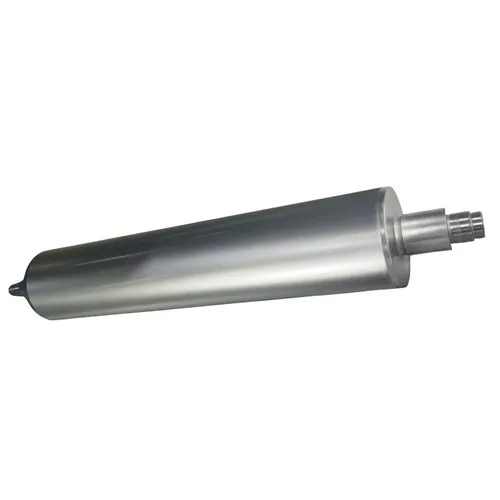
First off, let’s get on the same page about what cell volume actually is. It’s the amount of ink held in each tiny cell on the roller’s ceramic surface—we’re talking microliters per square centimeter (µL/cm²) here. Too low, and your prints look faded or streaky. Too high, and you get blobs, over-saturation, or ink smearing. For us as a supplier, measuring this accurately isn’t just for quality control—it’s how we make sure the roller you get fits your specific press job, whether you’re doing flexo packaging, labels, or corrugated.
Now, how do we actually measure this? We’ve tried a few methods over the years, and some are way better than others. Let’s start with the most common one that’s still super reliable: the Ink Fill Method. Yeah, it’s old-school, but it works when done right. Here’s how we pull it off in our shop. First, we clean the roller really well—no leftover ink, solvent, or gunk in the cells. We use a mild, non-abrasive cleaner and a soft brush, then blow it dry with compressed air (low pressure, so we don’t damage the ceramic). Next, we coat the entire surface with a uniform layer of ink—usually a high-viscosity, non-drying ink that won’t evaporate mid-test. We roll a rubber roller over the anilox to push ink into every single cell, then wipe off all the excess ink from the land areas (the flat parts between cells) with a lint-free cloth and a little solvent, being careful not to pick ink out of the cells.
Once the cells are full and the lands are clean, we take a small sample area—usually a 1 cm² square section, that’s easy to calculate. We blot that square onto a pre-weighed absorbent card, then weigh the card again. The difference in weight is the amount of ink in that 1 cm² spot. We repeat this like 5 times across the roller (front, middle, back—because sometimes the surface isn’t perfectly uniform) to get an average. Then we convert that weight to volume, since the ink’s density is a known number. For example, if 1 cm² holds 0.8 µL of ink, that’s our cell volume. But wait—we always adjust for ink density, because different inks have slightly different weights. This method is quick, doesn’t need fancy gear, and it’s what we use for quick checks before a roller ships out.
But hold on, the Ink Fill Method has flaws. If you don’t wipe the lands evenly, you get wrong numbers. Or if the ink starts drying, that skews the weight. So for more precise measurements, we use the Gravimetric Dilution Method sometimes, especially for custom rollers or high-volume jobs where accuracy is non-negotiable. This one’s similar but takes a few extra steps. We take a known area (like 10 cm², to get more ink) and fill the cells, then extract all the ink from that area using a solvent we know won’t leave residue. Then we dilute that ink solution to a specific volume, and use a spectrophotometer to measure the concentration of the ink. From there, we calculate how much ink was originally in the cells. It’s way more accurate, down to like 0.01 µL/cm², but it takes longer—so we save it for when a client needs extra precision, like for high-end labels with super detailed prints.
Lately, we’ve been playing with non-contact methods too, because we hate risking damage to the ceramic surface. The Laser Scanning Method is a game-changer here. We use a high-precision laser that scans across the roller’s surface, maps every cell’s depth and volume, and crunches the numbers in real time. No ink, no wiping, no touching the surface—perfect for new rollers where we don’t want to mess with the cell structure. The laser measures the 3D shape of each cell, calculates its volume, and averages hundreds of cells to give us a super accurate number. We use this a lot for our new custom rollers, because it lets us see exactly how deep each cell is, which is directly tied to volume. The only downside? The gear’s expensive, but it’s worth it for the level of detail. We also use it for rollers that come back to us for reconditioning—we can check if the cells have worn down (which makes volume drop) before we recoat them with new ceramic.
Wait, but there’s one thing everyone overlooks: roller prep affects measurement, a lot. If the roller isn’t mounted straight on the test stand, or if there’s any runout (wobble) when it spins, your measurements will be off. We always mount the roller on a precision spindle, check for runout with a dial indicator, and make sure it’s spinning at a consistent slow speed so the test is uniform. Temperature matters too—solvents evaporate faster in hot shops, ink viscosity changes in cold, so we keep our testing area at a steady 20°C (68°F) for every measurement.
Also, let’s talk about reconditioned rollers, because that’s a big part of our business too. When a client sends back a used ceramic anilox, we need to measure its remaining cell volume before we recoat it. The laser scan is perfect here, because we can see how much the cells have worn from use. If the volume is too low, we have to recoat or turn the roller down. We recently had a client who thought their roller was shot, but the laser scan showed it still had 90% of its original volume—we just needed to touch up the surface, which saved them from buying a new one. That’s the stuff that makes us happy, right? Helping clients stretch their budget without sacrificing quality.
Common mistakes we see new press operators make when measuring cell volume: using the wrong ink, not cleaning the cells properly, or only testing one spot on the roller. The cells are usually evenly spaced, but over time, wear can make them slightly different from end to end. That’s why we test multiple spots across the entire working width of the roller—front, middle, back, and even 10 cm in from each end—to make sure the volume is consistent. If you only test the middle, you might miss a worn spot at the edges that’s causing bad prints.
As a supplier, our job isn’t just to ship rollers—it’s to make sure they work for your specific press and job. That’s why we include cell volume measurements with every roller we send, along with notes on which method we used and how to verify it if you want. We also offer on-site testing for clients who want to check rollers themselves, or help them figure out why prints are off—9 times out of 10, it’s a volume issue.
If you’re in the market for a new ceramic anilox roller, or you need reconditioning for an old one, we’ve got you covered. We don’t cut corners on testing, we use the most accurate methods available, and we tailor every roller to your exact needs. Whether you’re printing food packaging, custom labels, or corrugated boxes, we can make sure your cell volume is spot-on so your prints look great and your press runs smooth. Don’t hesitate to reach out if you have questions about cell volume, roller maintenance, or anything anilox-related—we’re here to help.
Ceramic Anilox Roller References:
- General Printing Ink Council. (2021). Handbook for Anilox Roller Technology and Maintenance. Printing Industry Association of America.
- Smith, J. A., & Lee, M. (2019). Non-contact measurement of ceramic anilox roller cell volume for flexographic printing. Journal of Printing Science and Technology, 58(3), 112-120.
- International Organization for Standardization. (2017). ISO 12215:2017, Printing Technology—Anilox Rollers for Flexographic Printing—Definitions and Methods for Measuring Cell Volume.
Kunshan Hanhan Co., Ltd.
We’re well-known as one of the leading ceramic anilox roller manufacturers and suppliers in China. We warmly welcome you to buy high quality ceramic anilox roller made in China here from our factory. If you have any enquiry about cooperation, please feel free to email us.
Address: No. 1093, B Zone, No. 2 Xugongqiao Rd, Huaqiao Town, Kunshan City, Suzhou, Jiangsu, China
E-mail: info@kshhroller.com
WebSite: https://www.kshh-roller.com/
