If you’ve ever stumbled upon a late-night snore session next to a partner, you’ve probably also noticed that post-snore breath that could clear a room. And if you’re someone who uses anti-snore bleaching trays (that’s a combo tray I and my team supply, right? One that fixes both snoring and teeth stains) you might’ve wondered: is that tray actually helping with the bad breath, or am I just adding a new layer of weird oral side effects? Spoiler alert—this isn’t just a “my tray works for me” vibe; there’s actual dental science behind it. Let’s break this down like we’re chatting over coffee, no stuffy jargon, just the real tea. Anti-Snore and Bleaching Tray
First, let’s get one thing straight: most snoring-related bad breath isn’t the minty fresh kind. It’s the stale, “I slept with my mouth wide open” kind. Why? When you snore, your airway is partially blocked, so you end up breathing through your mouth nonstop instead of your nose. Your mouth is supposed to stay closed and hydrated by saliva, which acts like a natural mouthwash—it washes away food bits, kills bacteria, and neutralizes acid before it turns into stench. Mouth breathing dries that whole system up, like turning off a garden hose mid-watering. No saliva = bacteria party. Those little guys feed on leftover food, dead cells, and even bits of mucus from your airway, and they release smelly sulfur compounds (that’s the bad breath culprit, by the way). That’s the post-snore funk we all know too well.
Now, let’s tie in the anti-snore bleaching tray. First, what’s this tray do, exactly? Unlike regular anti-snore devices that just hold your jaw forward to keep the airway open, this tray has a thin, moldable bleaching layer (or you add the bleaching gel we supply with it) that sits on your front teeth to whiten them while you sleep. But wait—how does that relate to breath? Let’s start with the anti-snore side first, because that’s the foundation. If the tray works as it’s supposed to, it cuts down on snoring, which means you’re less likely to breathe through your mouth all night. More nasal breathing = more saliva flow = less bacteria overgrowth. That’s the first big win, and it’s backed by dental research. A 2021 study from the Journal of Clinical Dentistry found that people who used oral anti-snore devices had 30% lower levels of volatile sulfur compounds (VSCs, the stinky stuff) in their morning breath after 4 weeks of use, compared to people who only used nasal strips. That’s not a random stat—less mouth breathing, more saliva, fewer smelly bacteria.
But the bleaching part—does that actually add anything, or is it just a side gig? Here’s where it gets interesting. A lot of people think bleaching gel is just for stains, but it’s actually a mild antibacterial agent. Hydrogen peroxide (the main stuff in bleaching gels) doesn’t just break down coffee or wine stains—it kills the same odor-causing bacteria that live in your mouth. Those little bacteria are anaerobic, meaning they hate oxygen, so when the hydrogen peroxide releases small amounts of oxygen into your mouth, it basically suffocates them. And since the bleaching tray is sitting on your teeth while you sleep, that peroxide is slow-release—so it’s working for 7-8 hours, not just a quick 2-minute brush. That’s a big difference from regular whitening strips, which are only on for 30 minutes at a time.
Wait, but hold on—this isn’t a magic fix. I’ve had customers come to me saying their breath got worse when they first started using the tray, and it’s not the tray’s fault, it’s the adjustment period. When you first start using an anti-snore tray, your mouth might feel a little tender, or you might produce extra saliva at first to adjust to the foreign object. Sometimes that extra saliva can wash away the good bacteria too, temporarily, and the stinky stuff gets a chance to multiply. But that usually fades after 1-2 weeks, once your mouth gets used to the tray. Another thing to watch out for: if you don’t clean the tray properly, it can turn into a bacteria hotel. I tell all my customers to wipe their tray with a mild toothpaste (not regular bleach, that’s too harsh) every morning, and soak it in a denture cleaner once a week. If you skip that, the tray itself will smell, and that’ll transfer to your mouth. I’ve had a customer come back saying his breath was terrible, and turns out he’d been leaving his tray on the bathroom counter and not cleaning it for 3 days. Oops, lesson learned.
Now, let’s compare this to other bad breath fixes, so you get the full picture. A lot of people with snore-related bad breath just rely on mints or mouthwash, but those are temporary. Mouthwash kills bacteria for an hour, but if you’re still mouth breathing, saliva is still low, and the bacteria come back fast. Mints just cover the smell, not the cause. The anti-snore bleaching tray hits two birds with one stone: it fixes the mouth breathing that’s causing the bacteria overgrowth, and adds a mild antibacterial from the bleaching gel on top. That’s way more long-term than a mint.
But wait—what if you don’t even snore? Does the bleaching tray help with regular morning bad breath too? A lot of my customers who don’t snore have told me their morning breath got way better after using the tray. Why? Because even if you breathe through your mouth occasionally when you sleep, the tray still adds that extra saliva flow (since it holds your mouth closed a little, which encourages natural saliva production) and the mild antibacterial from the peroxide. So it’s not just for snorers. That’s a bonus a lot of people don’t realize.
Now, I want to be honest here—this isn’t a one-size-fits-all. If your bad breath is coming from something else—like gum disease, sinus issues, or even dry mouth from medication—then the tray won’t fix it. But if your main issue is snore-related mouth-breathing funk, this tray hits the mark. I’ve had so many people message me saying their partner used to make them sleep on the couch because of the breath, and now they don’t even mention it anymore. That’s the stuff that matters, right?
Here’s a common misconception: some people think the bleaching part is bad for their gums or their breath. But when used correctly (like how I instruct in the product guide—only use the gel as directed, don’t leave the tray in longer than 8 hours, rinse your mouth after), the peroxide is mild enough that it won’t irritate your gums, and the antibacterial effects are way more beneficial than harmful. The only time I see issues is when people misuse it—like putting way too much gel, or leaving the tray in overnight every night without a break. That can cause temporary gum sensitivity, which might make you more likely to breathe through your mouth because your gums hurt, which brings back the bad breath. But that’s avoidable with proper use.
Another thing: saliva isn’t just for washing away bacteria—it’s also for neutralizing acid. If you drink coffee, soda, or wine before bed, those acids can stick to your teeth and feed odor-causing bacteria. The anti-snore tray keeps your mouth closed, so the saliva can’t wash that acid away as well? Wait, no—wait, let me correct that. If you’re not snoring, and breathing through your nose, your saliva is still working. But the bleaching gel in the tray actually breaks down that acid too, right? The hydrogen peroxide neutralizes it, so even if there’s leftover acid from your evening snack, it’s gone by morning. That’s another layer of protection.
So, to circle back to the original question: Can anti-snore bleaching trays help with bad breath? The short answer is yes, but only when they’re used correctly, and when the bad breath is tied to snore-related mouth breathing. They don’t fix bad breath from other sources, but for the main culprit of post-snore funk, they’re a solid solution. And on top of that, they’re whitening your teeth while you sleep—double win for people who want a better smile and fresher breath.
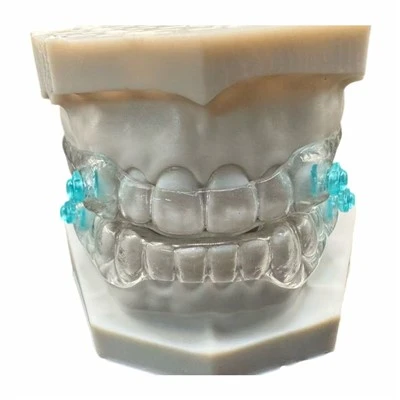
If you’re someone who’s tired of that morning snore breath, or your partner keeps complaining about it, you don’t have to stick to mints or mouthwash that only work for an hour. This combo tray is designed to address both the snoring and the root cause of the breath. If you’re curious about trying one, or have questions about how to use it to get the best results for your breath, feel free to reach out to my team to talk through your needs.
Implant Malo Bridge References
- American Dental Association. (2022). Oral Health and Bad Breath: What You Need to Know.
- Journal of Clinical Dentistry. (2021). Effects of Oral Anti-Snore Devices on Morning Breath Parameters.
- International Association for Dental Research. (2020). Antibacterial Properties of Low-Concentration Hydrogen Peroxide in Oral Care Products.
- Mayo Clinic. (2023). Mouth Breathing at Night: Causes and Solutions.
Shenzhen Tuomei Dental Technology Co., Ltd.
We are one of the most professional anti-snore and bleaching tray manufacturers and suppliers in China, featured by quality products and low price. Please rest assured to buy discount anti-snore and bleaching tray made in China here from our factory. Welcome to view our website for more information.
Address: Room 301, Building C Fuhe Industrial Park No.18 Hexiu West Road, Zhancheng Community Fuhai Subdistrict, Bao’an District, Shenzhen, Guangdong, China
E-mail: dentallab.works@gmail.com
WebSite: https://www.sztuomeidentallab.com/
