What is a locking rivet? If you’ve ever browsed through our shop’s inventory of pins and rivets, chances are you’ve seen these little workhorses and wondered what makes them different from your standard rivet. Let’s break it down in plain terms—no stuffy engineering jargon, just the real deal. Pins and Rivets
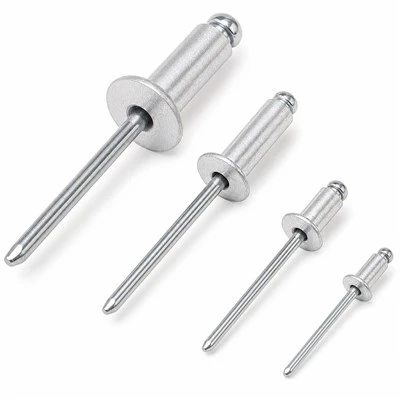
First off, a regular rivet does a solid job of joining two pieces of material, right? You drill a hole through both, shove the rivet in, and hammer or squeeze the tail to flare it out, clamping the materials tight. But here’s the thing: regular rivets can come loose over time, especially if the application’s taking a beating—like a vibrating truck frame, a piece of heavy equipment that bounces around on job sites, or even a playground swing set that gets used every day. That’s where locking rivets step in.
So what’s the key difference? Locking rivets have a built-in feature that keeps the installed rivet from spinning or working its way out. Most standard rivets are just a smooth shank with a head on one end and a tail that deforms. Locking ones add a little extra “grip”—usually a ring, a set of small teeth, or a deformed section that locks into the hole’s material once you set the rivet. Think of it like a key and a lock: once the rivet’s in place, it can’t just turn or pull out without intentional force.
Let’s talk about how they work, since that’s where it gets super useful for folks like you who need reliable fasteners. When you insert a locking rivet into a pre-drilled hole, the locking mechanism isn’t active yet. As you set the rivet—whether with a rivet gun, a hand squeezer, or even a specialty tool—two things happen: you flare the tail to create the clamped head on the other side, and the locking part engages. For example, some locking rivets have a split collar that slides down the shank as you set it, expanding into the grooves of the hole or locking around the shank. Others have integral teeth that bite into the sheet metal or material you’re joining, so even if there’s vibration, there’s no way the rivet can rotate or back out.
This isn’t just theoretical, either. I’ve seen it firsthand with a local farm equipment repair shop that used to go through regular rivets on their tractor buckets every few months. The constant lifting and vibrating made the regular rivets loosen, causing buckets to wobble and sometimes even fail on the job. Once they switched to our locking rivets, they told me they haven’t had a single loose rivet issue in over a year. That’s the real value here—no more downtime, no more replacing fasteners mid-project, no more headaches from things falling apart when you least expect it.
Now, let’s cover the main types of locking rivets we carry at our shop, since not all locking rivets are made the same, and picking the right one matters. First up are blind locking rivets—these are perfect if you only have access to one side of the joint, like when you’re assembling a car door panel or a piece of furniture. Blind locking rivets have a mandrel that you pull to set the rivet, and the locking feature engages as the mandrel snaps. We’ve got open-end and closed-end blind locking rivets, too—closed-end ones are great for applications where moisture or dust could get in, since they seal the hole after setting.
Then there’s structural locking rivets, which are for heavy-duty stuff. Think bridges, construction equipment, marine applications—places where the joint has to bear a ton of weight and stand up to harsh conditions. These locking rivets usually have a stronger material, like aluminum, steel, or stainless steel, and their locking mechanism is way more robust to prevent any movement. I’ve worked with a marine parts manufacturer that uses our stainless steel structural locking rivets for boat hulls—saltwater, wave impact, constant vibration from the engine—they hold up way better than standard rivets, which corrode and loosen fast in salt environments.
We also have breakstem locking rivets, which are super popular for assembly lines where speed matters. These have a stem that snaps off at a set torque when you’re done setting it, so you don’t have to worry about over-setting or under-setting. The locking feature is built into the rivet body, so once the stem breaks, the rivet is locked tight. I’ve talked to a couple of small machinery shops that use these for their production runs—they cut their assembly time by almost 30% because setting the rivets is so quick and consistent.
Wait, let’s get into when you should actually use a locking rivet vs. a regular one. That’s a question we get a lot, so let’s make it clear. If your joint is in a low-vibration, indoor application where nothing’s going to rattle around—like a decorative metal shelf that’s just sitting in a living room— a regular rivet is fine, it’s cheaper and easy to install. But if you’re dealing with any of these scenarios, locking rivets are the way to go:
- Applications with constant vibration: heavy equipment, trucks, motorcycles, playgrounds, generators
- Outdoor or harsh environments: marine, construction, agricultural equipment where there’s moisture, dirt, or temperature changes
- High-load joints: things that lift, support weight, or take repeated stress—like crane parts, trailer frames, ladder rungs
- Situations where you can’t access both sides of the joint: blind applications, which we already touched on, but also if you don’t want to have to finish both sides of the rivet after installation
A common mistake we see is people using a regular rivet when they need a locking one, or vice versa. Last year, a guy came into our shop with a broken handrail for his deck—he’d used regular rivets, and after a year of sun, rain, and people leaning on the rail, the rivets had loosened and pulled out. We swapped his regular rivets for stainless steel locking ones, and he texted us a month later saying the rail was solid as a rock. It’s just a small switch that makes a huge difference in durability.
Now, for folks who might be new to buying pins and rivets, or who haven’t worked with locking rivets before—what should you look for when ordering? First, match the material to your application. Stainless steel is great for corrosion resistance, aluminum is lightweight for aerospace or furniture, steel is super strong for heavy loads. Then, check the hole size: locking rivets need a precise drill hole size, so make sure you measure your material’s thickness and get the right length rivet. Too short, and you won’t have enough flared tail to lock; too long, and you’ll have extra material sticking out that might get caught on things. And don’t forget the head style—we have round heads, countersunk heads, which sit flush so nothing catches on them. Countersunk is perfect for things like furniture or panels where a flat surface is important.
At the end of the day, locking rivets aren’t just a “fancy upgrade”—they’re a solution to a really common fastener problem. We’ve all had that moment where a loose screw or bolt ruins a project, and locking rivets solve that for riveted joints. That’s why we stock a huge range of locking rivets, in all sizes and materials, to fit whatever our customers are working on.
If you’re in the market for pins and rivets, and you’re tired of dealing with loose fasteners that cost you time and money, we’re here to help. Whether you’re a small farm needing rivets for tractors, a furniture maker putting together cabinets, a construction company working on a new building, or a marine shop fixing boats, we’ve got the locking rivets you need. Shoot us a message to chat through your application, ask about sizes or materials, or place an order—we’re happy to walk you through anything, no confusing sales pitch, just real answers for your projects.
Nuts References
- American Society of Mechanical Engineers. (2020). Rivet Design and Installation Standards for Structural Fasteners. ASME International.
- Fastener Technology International. (2021). Locking Fasteners: A Guide to Types and Application Best Practices. FTI Publications.
- Society of Manufacturing Engineers. (2019). Blind Rivet and Locking Rivet Performance in Vibration-Resistant Applications. SME Press.
- Stainless Steel Fasteners Association. (2022). Corrosion Resistance of Locking Rivets in Marine and Outdoor Environments. SSFA Technical Bulletin.
Wenzhou Kaize Hardware Co., Ltd.
As one of the most professional pins and rivets manufacturers and suppliers in China, we also support customized service. Please feel free to buy bulk high quality pins and rivets in stock here from our factory. Welcome to contact us for pricelist.
Address: 1st Floor, No.110 Zhongxing Road, Industrial Park, Yongzhong Subdistrict, Longwan District, Wenzhou City, Zhejiang Province
E-mail: kaizefastener@126.com
WebSite: https://www.kaizefastener.com/
