If you’ve ever knelt down to power a small robot arm, navigated a custom conveyor system, or even fired up a portable power tool, chances are you’ve encountered two motors that dominate these low-to-medium torque, precise motion applications: permanent magnet DC (PMDC) motors and gear motors. As a PMDC motor supplier who’s spent the last 12 years fielding questions from industrial engineers, hobbyists, and product designers alike, I can tell you this is one of the most common, and most critical, distinctions my customers need to get right. Too many folks mix these two up, leading to overbuilt systems, higher costs, or motors that simply can’t keep up with the job. Let’s break this down clearly, no jargon overload—just real-world context from someone who’s sold hundreds of these motors and troubleshooted dozens of misapplications. Permanent Magnet DC Moto
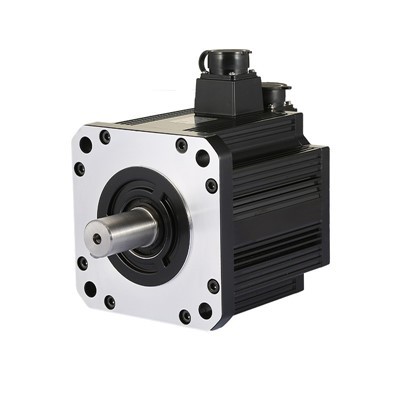
First, let’s start with the core of what a permanent magnet DC motor actually is, because that’s the foundation. Unlike other DC motors that use electromagnets in their stator (the stationary part of the motor) to generate a magnetic field, a PMDC motor relies on permanent magnets mounted right on the stator. Those magnets—usually made from ferrite or neodymium, depending on the power and size—are always magnetized, so you don’t need extra power to energize them. That’s a huge win for efficiency, right from the start. When you run DC current through the rotor (the spinning part, which has its own smaller electromagnet, called an armature), the magnetic force between the stator’s permanent magnets and the rotor’s electromagnet causes the rotor to spin. Simple, straightforward design. My most popular PMDC motors are the 12V 50W and 24V 100W models used in automated lab sample handlers; they’re compact, low-maintenance, and reliable for consistent, small-scale motion.
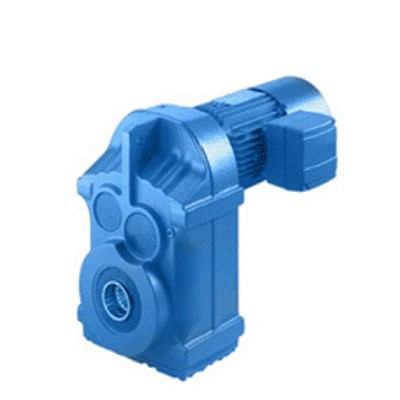
Now, what’s a gear motor? Here’s where the confusion usually sets in: a gear motor isn’t inherently a separate motor type—it’s a combination of two parts: a standard motor (which could be a PMDC, brushed DC, brushless DC, or even an AC motor) and a gear train. The gear train is a set of interlocking gears (spur, planetary, worm, you name it) that’s attached to the motor’s output shaft. Its whole job is to adjust two key motor specs: speed and torque. Let’s get into that, because that’s the biggest functional difference people care about.
Let’s use a relatable example. Say you have a small automated conveyor belt that needs to move 10-pound boxes at 10 feet per minute. If you take a standard 12V PMDC motor, it might spin at 3,000 RPM (rotations per minute) unloaded. That’s way too fast for a conveyor—if you connected that directly to the belt, the boxes would fly off, and the motor would struggle to generate enough torque to pull the weight. A gear motor takes that same high-speed, low-torque motor (like a PMDC) and slows it down. A 5:1 gear reduction would cut the speed to 600 RPM, a 50:1 reduction would drop it to 60 RPM, and a 500:1 reduction might get it to 6 RPM, with a corresponding boost in torque. For every reduction ratio, torque goes up proportionally: a 50:1 gear motor would have 50x more torque than the base motor. That’s why gear motors are synonymous with high torque at low speeds.
Wait a second—so can a PMDC motor be a gear motor? Yes, technically. If you attach a gear train to a PMDC motor, you’ve got a PMDC gear motor. But the core PMDC motor, on its own, is a standalone unit, while gear motor is a system that adds gearing to any base motor. That’s a key distinction I make sure my customers grasp early on. Let’s clarify the core functional differences that matter for real applications, beyond just definitions.
First, efficiency. PMDC motors are inherently efficient because they don’t waste power energizing stator electromagnets. When you add a gear train to make a gear motor, you introduce friction and energy loss in the gears—usually 5% to 15% loss per gear set. So a PMDC motor without gearing will always be more efficient than a gear motor made with the same base PMDC. For battery-powered applications—like portable medical devices, hobbyist drones, or remote monitoring sensors—this efficiency translates directly to longer run time. I recently worked with a startup building portable insulin pumps; they switched from a 12V PMDC gear motor (82% efficiency) to a standalone PMDC motor paired with a custom gear train they built in-house, and extended their battery life by 18% without losing any torque for the pump’s motion. That’s the kind of detail that makes or breaks a small, battery-powered product.
Next, size and weight. Standalone PMDC motors are smaller and lighter than gear motors delivering the same torque. Because gear motors have to house the gear train, they add extra bulk. For applications where space is premium—like the small actuators used in robotic vacuum cleaners, or the fans in compact server racks—a standalone PMDC motor is often the better pick. Take our 24V 50W PMDC motor: it’s 6cm long, weighs 220 grams, and delivers 1.2 Nm of torque at 100 RPM. To get that same torque from a gear motor, you’d need a base PMDC, gear train, and housing, totaling 9cm long and 350 grams. That extra 130 grams might not sound like much, but for a drone that needs to keep weight under 1kg, or a prosthetic arm that has to be light enough for daily use, that’s a game-changer.
Control precision is another big point. Standalone PMDC motors offer finer speed control at higher speeds, which is critical for applications like automated testing equipment or small CNC machines. Because they have no gear slop (that tiny amount of play between gears that causes delayed motion), you can adjust speed incrementally—for example, changing from 1,500 RPM to 1,510 RPM smoothly—to get exactly the motion you need. Gear motors, on the other hand, have that gear slop, which makes them less precise for fine adjustments. They’re better for steady, low-speed motion where speed consistency matters more than micro-adjustments. For example, if you’re driving a conveyor belt that moves at a fixed 10 feet per minute, a gear motor is perfect, because as long as it stays at that steady speed, the tiny slop won’t cause problems. But if you need to move a sample plate in a lab that’s accurate to within 0.1mm, a standalone PMDC motor paired with an encoder is the way to go.
Durability and maintenance—let’s talk real-world use, not spec sheets. Standalone PMDC motors have fewer moving parts than gear motors, right? No gear train, so less wear and tear from meshing gears, less lubrication needed, and fewer points of failure. I’ve had customers tell me our PMDC motors ran for 5,000 hours in a textile weaving machine with barely any maintenance, just occasional bearing checks. Gear motors have more parts: gears, bearings, seals, and that gear train requires periodic lubrication to prevent wear, especially if they’re used in dusty or dirty environments (like construction equipment or agricultural tools). If lubricant runs dry, gears will strip, and the whole motor fails. That’s a big consideration for environments where routine maintenance is hard to do.
Cost, too—this is probably the first question customers ask. Standalone PMDC motors are cheaper than gear motors for the same output torque. Because you’re buying one motor, not a motor plus a gear assembly. Let’s say a 12V PMDC motor that delivers 1 Nm of torque costs $15. A 12V gear motor that delivers the same 1 Nm of torque would cost $25, because you’re paying for the base motor, gears, and housing. That’s a $10 difference per unit, which adds up for orders of 100 or 1,000. But wait—if you need that low speed and high torque, you can’t use a standalone PMDC motor. A standard PMDC motor spins at thousands of RPM, so to get 1 Nm at 10 RPM, you’d need a gear train anyway, which means you’d have to pay for that gearing. So it’s all about matching the motor to your application’s needs.
Now, let’s clear up a common myth: “Gear motors are always more powerful.” No, that’s not true. A gear motor doesn’t create power—it converts it. Power is torque times speed, right? (P = T x ω, in basic motor terms.) A 100W PMDC motor, when geared down 100:1, will deliver 100W of power (minus that 5-15% gear loss). A standalone 100W PMDC motor spinning at 3,000 RPM is also delivering 100W. So power is the same, just split between speed and torque. If you need high speed, use a standalone PMDC motor. If you need low speed with high torque, use a gear motor (which is just a PMDC or other motor with gearing).
I want to mention a few common misapplications I’ve seen over the years, because that’s where this knowledge really pays off. Last year, a robotics startup came to me with a prototype of a small robotic arm, and they were using a gear motor for each joint. They were having trouble with the arm’s speed being too slow and the slop making the movements imprecise. We swapped the gear motors for standalone PMDC motors with small encoders, and they doubled the arm’s speed while keeping the same torque, and eliminated the slop. That was a simple fix, but it came from understanding the difference between when you need a geared system and when you don’t. Another example: a food processing company was using gear motors to run their conveyor belts, but the gear grease was contaminating the food product. They switched to standalone PMDC motors driving the conveyor via a chain and sprocket system, eliminating the grease risk, and saved 12% on energy costs because of higher efficiency.
So, to wrap this up, let’s get back to the core difference, in plain terms. A permanent magnet DC motor is a standalone motor that uses permanent magnets to generate magnetic force, delivering high speed and moderate torque, with high efficiency, small size, and fine control. A gear motor is a system that combines any base motor (including PMDC) with a gear train to reduce speed and increase torque, at the cost of some efficiency, extra size and weight, and slightly less precision. The right choice depends entirely on your application: do you need high speed with precise control? Go with a PMDC motor. Do you need low speed with high torque for heavy loads? A gear motor (usually built on a PMDC base) is the way to go.
If you’re working on a project, whether it’s a small hobby robot, an industrial automation system, a medical device, or something in between, and you’re not sure which motor is right for you, I’m here to help. As a permanent magnet DC motor supplier, I’ve worked with teams of all sizes to match the right motor to their needs, answer questions about efficiency, torque, speed, and even help with custom modifications if needed. Don’t guess at your motor choice—reach out, and let’s talk through your project details to find the best solution.
Switched Reluctance Motor References
Bolton, W. (2015). Electrical Machines and Drives. Newnes.
Hendershot, J. R., & Miller, T. J. E. (2011). Design of Brush Permanent-Magnet Motors. Magna Physics Publishing.
Krishnan, R. (2010). Permanent Magnet Synchronous and Brushless DC Motor Drives. CRC Press.
Zibo Auric Mechanical and Electrical Technology Co., Ltd.
As one of the leading permanent magnet dc moto manufacturers and suppliers in China, we warmly welcome you to buy advanced permanent magnet dc moto for sale here from our factory. All customized motors are with high quality and competitive price.
Address: B419, High-tech Entrepreneurship Park, High-tech Zone, Zibo City
E-mail: cui@auricmotor.com
WebSite: https://www.auricmotor.com/
