Hey everyone! If you’re here, chances are you’re either in the market for a resistance wire welding machine, you’ve already got one that’s acting weird, or you’re just low-key obsessed with how those tiny, strong welds get made (same tbh). I’ve been supplying these machines for over 12 years now, and hands down the question I get asked more than any other is some version of: “What voltage do I even need for my resistance wire welder?” Resistance Wire Welding Machines
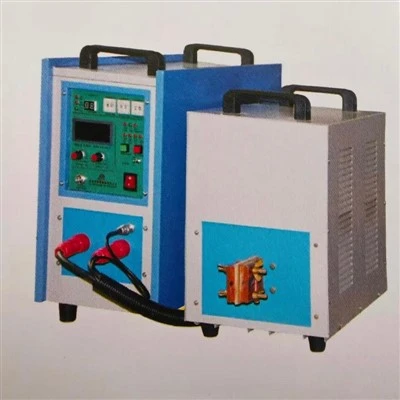
Let’s cut to the chase—there’s no one-size-fits-all answer here, and if someone tries to tell you there is? They’re either selling you a one-size-fits-no-one machine or they skipped the math class that actually matters for this stuff. Let’s break it down like we’re chatting in my workshop, not reading a textbook (though I’ll throw in the real science so you don’t burn your shop down). First, let’s refresh what resistance wire welding even is, quick—for the new folks. It’s that method where you clamp two metal parts between electrodes, send a big burst of current through the contact area, and the resistance from the metal (and a touch of electrode resistance) heats that tiny spot up so much it melts and fuses together. Voltage is the “push” that gets that current flowing, right? But here’s the thing—current actually does the heavy lifting, but voltage is the gatekeeper. Mess that up, and your welds are either spotty, burnt, or you’re blowing fuses left and right.
Now, let’s talk shop floor basics. 90% of the shops I work with fall into three categories, and their voltage needs are tied directly to what they’re welding. Let’s start with the small guys—hobbyists, prototype shops, or people doing tiny parts like jewelry, small electronics leads, or thin gauge wire (think 20 to 30 gauge, that’s like 0.8mm down to 0.3mm). These folks almost always have standard 120V (US) or 220V (EU) wall power. Wait, but hold on—can you just plug a welder straight into a wall outlet? For small parts, yes, but not every 120V welder is the same. The key here is not the voltage itself, but the kVA (kilovolt-amp) rating of the machine, because that’s how much power it can actually pull from the wall. For thin wire, you only need a fraction of the power—like a 1kVA machine on 120V works for jewelry, while a 2kVA 220V machine is perfect for small electronics components. I had a customer last year who tried to use a cheap 120V welder from a big box store for welding 18-gauge nickel strips for lithium ion batteries—burned out three welders in a week because that 120V machine couldn’t deliver enough consistent current. Lesson here: wall voltage is your starting point, but match the machine’s power rating to your material, not just the socket in your wall.
Next up, the mid-sized shops—these are the guys doing automotive small parts, larger wire gauges (12 to 20 gauge, 2mm down to 0.8mm), or multiple welds in a row, like assembling wire harnesses. Most of these shops have 220V single-phase power, and that’s the sweet spot for a lot of resistance wire welding. Why? Because 220V gives you more power without the voltage drop that can happen with 120V when you’re pulling higher current. Wait, what’s voltage drop? That’s when the wire in your shop’s circuit isn’t thick enough to carry the current the welder needs, so the voltage drops mid-weld and your current is inconsistent. For mid-range welds, a 5kVA to 10kVA machine on 220V single-phase is standard. I work with a company that makes custom wire harnesses for electric bikes—they run three 8kVA 220V welders side by side, and they haven’t had a voltage issue in three years. That said, if you’re in a facility with heavy equipment already running (like a shop that has a lathe and a plasma cutter), you might want to check your circuit capacity. I once had a customer with a 10kVA 220V welder who kept getting inconsistent welds until an electrician pointed out their circuit was only rated for 15kVA total, and the plasma cutter was pulling 7kVA alone—adding the welder pushed the voltage down too much. So always run a quick circuit check before pulling the trigger on a machine, even if the voltage matches your socket.
Now, the big dogs—shops doing heavy industrial work, like large gauge wire (8 to 12 gauge, 4mm down to 2mm), wire mesh, or heavy automotive components like seatbelt connectors. These guys are almost always on three-phase power, usually 480V. Wait, why three-phase? Because three-phase power delivers much more consistent, higher power without the voltage drop that plagues single-phase at higher loads. For these applications, you’re looking at 15kVA to 50kVA machines, sometimes even bigger. I supply a company that makes reinforcement mesh for construction—they weld 8-gauge steel wire all day, and their welder is a 40kVA 480V three-phase unit. They tried a single-phase 220V unit two years ago and it kept tripping breakers because it couldn’t deliver enough sustained current. The science here is simple: power (in watts) = voltage x current. If you need 200 amps of current (which is what heavy welding needs), on 120V that’s 24,000 watts, on 220V that’s 44,000 watts, on 480V that’s 96,000 watts. Higher voltage means you can get that same high current without cranking the amperage so high that it fries your circuit or your welder’s transformer.
But wait—this isn’t just about the wall voltage. There’s a huge hidden factor here: your welder’s transformer. Most resistance wire welders don’t run at full wall voltage during the weld. They use a transformer to step the voltage down (to like 1V to 10V, insane right?) and step the current up (to hundreds or thousands of amps). That’s why you don’t get shocked when you’re using the electrodes—because the secondary side of the transformer is low voltage. So when people ask me “what voltage do I need?” I don’t even start with wall voltage—I start with “what material are you welding, how thick is it, and how many welds do you need to do per minute?” That’s the stuff that actually determines the machine’s kVA rating, which in turn tells you what wall voltage you need. I’ve seen guys with 120V power trying to use a 20kVA welder—they think “oh I have 120V so it should work” but the math just doesn’t add up. A 20kVA machine on 120V would need to pull 166 amps, and most household circuits can’t handle that, even a 50 amp outlet. That’s why you’ll never see a heavy welder running on 120V—it’s just not practical.
Another common thing I get asked: can I convert voltage? Like, if I have 220V single-phase but my machine is 480V three-phase, can I use a converter? The short answer is “sometimes, but don’t do it unless you have to.” Converters can add cost, cause voltage fluctuations, and reduce your machine’s power output. I had a customer a few years ago who tried a rotary phase converter for his 480V welder, and his welds were inconsistent until he just rewired his shop to get three-phase power. It saved him money long term, even though it was a hassle at first. If you have a small machine, a static converter might work, but for anything over 10kVA? Skip it. It’s not worth the headache.
Let’s also talk about common mistakes I’ve seen over the years. Number one: buying a machine based on voltage alone, not kVA. A $500 120V welder from Amazon might say “120V” on the label, but its kVA is only 0.5—useless for anything thicker than 20-gauge wire. Number two: not checking their existing power supply. I can’t tell you how many times a customer has told me “my 220V outlet works for my fridge” so it’ll work for the welder. Fridges pull a few amps—welders pull hundreds. Big difference. Number three: overdoing it. A guy welding 24-gauge wire for jewelry doesn’t need a 10kVA 220V machine—he’s wasting money on power he’ll never use, and it’ll be harder to control the weld (more power = more heat, easy to burn thin wire).
So let’s recap, so you don’t have to scribble notes:
- If you’re welding thin wire (<20 gauge), small parts (jewelry, electronics leads): 120V wall power, machine size 0.5kVA to 2kVA.
- If you’re welding medium gauge wire (12-20 gauge), harnesses, small automotive parts: 220V single-phase wall power, machine size 2kVA to 10kVA.
- If you’re welding thick wire (>12 gauge), mesh, heavy components: 480V three-phase wall power, machine size 15kVA to 50kVA+.
But wait—one more thing: if you’re not sure, don’t guess. A bad welder that can’t deliver consistent current (because voltage is mismatched) will waste your time, ruin materials, and cost you more in the long run than buying the right machine the first time. I’ve had customers come to me after wasting thousands on a mismatched machine, and it’s way easier to just get it right upfront.
If you’re still stuck—whether you’re upgrading your shop, expanding your product line, or just replacing an old welder—hit me up. I can walk you through your material, your existing power setup, and point you to the right machine without the fluff. No pushy sales talk, just straight answers from someone who’s been in this game for years and knows how frustrating it is to have welds that don’t hold or break parts mid-production.
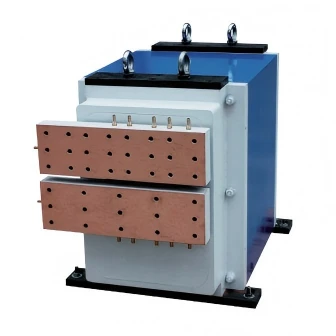
And for the folks who want the real science to geek out on later? I’ll link the key resources below—they’re not for light reading, but they’ll help you understand why voltage and kVA matter more than anything for resistance wire welding.
Projection Welding Machines References:
- American Welding Society. Resistance Welding Principles and Applications. 2019.
- Taylor, D. Industrial Welding Power Supplies: Voltage, Current, and Circuit Design. Industrial Press, 2021.
- National Electrical Code (NEC). Article 630: Welding Power Supply Circuits. 2023.
Dongguan Huineng Welding Equipment Co., Ltd.
We are one of the most experienced resistance wire welding machines manufacturers and suppliers in China. With a professional production team, we offer a wide range of products with superior quality. Please feel free to buy customized resistance wire welding machines at competitive price from our factory.
Address: 530 Guantai Road, Xitou Village, Houjie Town, Dongguan City, Guangdong Province
E-mail: fengshanggang75@126.com
WebSite: https://www.huinengwelder.com/
