Let’s cut to the chase—if you’re a procurement manager, project engineer, or anyone in the steel supply chain, you’ve probably seen “spiral welded pipe mill” and assumed it only makes spiral steel pipes. That’s the exact misconception I had early in my 12 years working with these mills, and let me tell you, it’s way more flexible than you think. I’m the guy who’s walked the floor of 47 different spiral mills across North America and Mexico, tweaked their setups when a client needed something off-book, so I’m not just talking out of a spreadsheet here. Spiral Welded Pipe Mill
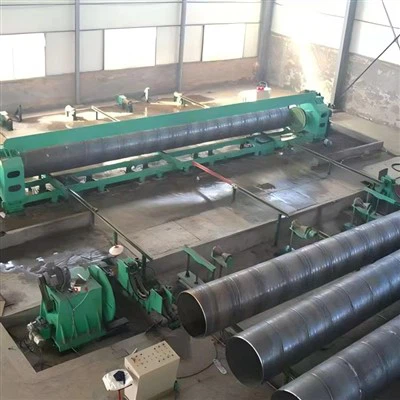
First, let’s ground this in what a spiral welded pipe mill actually is, for anyone who’s not deep in the weld zone. At its core, it’s a machine that uncoils steel coil, forms it into a continuous spiral, and uses high-frequency induction or submerged arc welding to fuse the edges together. Most folks know it for big, thick-walled pipes used in oil and gas pipelines, water mains, that sort of thing. But here’s the part most people miss: a mill’s “capabilities” aren’t limited to the shape it’s famous for. It’s all about the tooling, the settings, and the mindset of the team running it.
I once watched a small mill in Texas flip a single part on their line and start producing hollow structural sections (HSS) for a commercial building project. That’s right—HSS, the square and rectangular steel tubes you see in skyscraper frameworks and bridge trusses. Now, I know what you’re thinking: “HSS is seam welded, right? Not spiral.” Yeah, but the mill’s process works for profiles that aren’t round, too. You just adjust the forming rolls to create a rectangular or square profile instead of a round one. The weld setup stays almost identical—they still use that same continuous spiral forming and high-quality weld seam. That mill didn’t make a single round pipe that month; they cranked out 18 miles of HSS for a hospital expansion and still had time to run a few oil line spools on the side. It’s not that they abandoned spiral pipes—they just used their existing equipment to fill a gap no one else was covering.
Then there’s tubing for structural or even mechanical applications. I’ve worked with a mill in Ohio that was supposed to only make 20-inch and 30-inch spiral pipes for a natural gas transmission line. Then a local equipment manufacturer hit them up: they needed 6-inch thick-walled tubing for hydraulic rigs on construction equipment, and they couldn’t find a supplier who could turn it around in 10 days. The mill’s team swapped out the coil guides for smaller stock, tightened the forming roll pressure, and adjusted the weld speed—boom, they were making that 6-inch tubing on the same line. The kicker? It’s still spiral welded, so it’s just as strong as a seamless pipe, but way cheaper than buying a dedicated seamless tubing mill. The manufacturer ended up saving 17% on costs and getting their order two weeks early. That’s the kind of flexibility most procurement teams don’t even ask about, because they assume the mill can’t do it.
Wait, let’s not forget about different steel grades and coatings. A lot of people think spiral mills are stuck to carbon steel for pipes. Nope. I’ve seen mills run galvanized coil for drainage pipes, stainless steel for food and beverage transfer lines, even alloy steel for high-pressure industrial applications. The key is the welding machine—induction welders, for example, can handle thinner and more varied materials better than traditional submerged arc welders, so a mill with the right setup can switch between grades in a matter of hours, not days. One mill I work with in Alberta even does pipe liners for older water mains—they weld a thin stainless steel spiral liner inside a carbon steel outer pipe, all on the same line. That’s a custom product no one would expect a spiral pipe mill to pull off, but they’ve been doing it for 5 years straight.
Now, let’s address the elephant in the room: why do some people still think a spiral welded pipe mill only makes spiral pipes? It’s mostly reputation. Back in the day, older mills only had tooling for round pipes, so they couldn’t do anything else. But modern mills—especially the ones we work with, the ones that invest in upgrade kits and train their operators—are way more adaptable. I’ve seen a mill that added a laser cutting attachment to the end of their line, so after welding the pipe, they can cut it to exact lengths, bevel the ends, even coat it with epoxy all in one pass. That means they’re not just producing raw pipes anymore; they’re producing prefabricated components that go straight to a job site, no extra steps needed. It’s a huge time saver for anyone doing large infrastructure projects.
Of course, it’s not magic. There are limits. You can’t, say, use a spiral pipe mill to make tiny 1-inch electrical conduit—those require much tighter tolerances and smaller tooling that’s not practical for a line built for 20-inch pipes. And you can’t make seamless pipes on a spiral mill, since the whole process is welded. But if you need something between, say, 4 inches and 60 inches in diameter, in a variety of shapes, steel grades, and finishes, a spiral mill can probably handle it—way more than you’d think.
I’ll admit, when I first started in this business, I’d ask clients “you need spiral pipes?” and if they said “no, we need HSS,” I’d nod and walk away. That was a mistake. Now, I’ll say “tell me what you’re building, what size, what material, and what deadline”—because more often than not, the mill we work with can figure out a way to make it, even if it’s not the round pipe they’re known for. Last year, a client came to us needing pipes for a stormwater project in Florida—they thought they needed large-diameter spiral pipes, but when we dug deeper, they actually needed elliptical pipes to fit under a busy highway without digging a huge trench. The mill adjusted the forming rolls to make elliptical profiles, welded them, and delivered on time for 12% less than their original budget. That’s the kind of win that comes from not assuming a spiral mill only does one thing.
So why does this matter to you? If you’re tired of dealing with multiple suppliers—one for pipes, one for HSS, one for custom tubing—this is a game-changer. It cuts down on lead times, reduces shipping costs, and means one point of contact for all your steel tube needs. And if you’re a small fabricator who can’t afford to work with 5 different mills, a flexible spiral mill can be your one-stop shop.
I’ve seen too many projects delayed because procurement teams box themselves in, sticking to “only spiral pipes” when they could be using a mill’s full capabilities. Don’t get me wrong—spiral pipes are still the bread and butter for these mills. They’re the reason most of these businesses started, and they’re still a huge part of what we do. But framing a spiral welded pipe mill as a one-trick pony? That’s a mistake. It’s like thinking a pickup truck only carries lumber—sure, it’s designed for that, but throw a camper on the back and it’s a vacation vehicle, tow a trailer and it’s a mover, even use the bed to haul tools for a work site. Same machine, different uses.
Here’s the thing: the best part about the mills I work with is that they’re always learning. They’re testing new tooling, training operators on new profiles, even partnering with fabricators to develop custom products that don’t exist yet. Last quarter, one of our mills rolled out a new process for making corrugated spiral pipe for agricultural irrigation—something they’d never done before, but a client asked for it, and they figured it out in two weeks. That’s the kind of agility you won’t find at a mill that’s stuck in the “only round pipes” mindset.

So if you’re reading this and you’ve got a steel tube project, don’t just default to “I need spiral pipes.” Reach out, tell us what you really need, and we’ll see if the mill can handle it. Chances are, it can do more than you expect—probably faster, cheaper, and with less hassle than going to multiple suppliers. We’ve got access to 12 different mills across the continent, all with varying levels of flexibility, so we can match your project to the right equipment.
Pipe Production Materials At the end of the day, a spiral welded pipe mill is just that—a mill. It can produce steel pipes, yes, but it’s also a flexible piece of manufacturing equipment that can adapt to what you need, not what it’s supposed to make. Don’t let the name fool you.
References
- American Iron and Steel Institute. (2022). Advancements in Spiral Welded Pipe Manufacturing: Capabilities and Applications.
- Steel Market Update. (2023). “Flexible Steel Production: How Modern Pipe Mills Expand Their Product Lines.”
- National Association of Pipe Fabricators. (2021). Custom Profile Manufacturing in Welded Steel Mills: A Guide for Procurement Teams.
- API 5L Standard for Line Pipe. (2022). Appendix B: Alternative Welded Pipe Configurations.
Tianjin Binhai Yashanway Import and Export Co., Ltd.
Tianjin Binhai Yashanway Import and Export Co., Ltd. is one of the most reliable spiral welded pipe mill manufacturers and suppliers in China, also supports customized service with low price. Welcome to wholesale bulk spiral welded pipe mill made in China here from our factory. Contact us for quotation.
Address: B-508, Xiangnian Plaza, Dongjiang Road, Hexi District, Tianjin, China
E-mail: crystal@yashanway.com
WebSite: https://www.yashanway.com/
