As someone who’s been running a PCB manufacturing supplier for over 10 years now, I get it—most folks see PCBs as just tiny, green boards that power every gadget, and they assume slapping them together is just basic labor. But ask any of my lead technicians, and they’ll tell you straight: this job isn’t for anyone who can’t pay attention, learn fast, and pivot when things go sideways. Let’s break down the skills that separate a solid PCB line worker from someone who’s always troubleshooting mistakes on the clock. PCB Manufacturing
First off, let’s talk about technical basics, not just the vague “knowing how PCBs work” stuff. A lot of new hires roll in thinking they just need to memorize terms like “trace width” or “layer count,” but the real skill here is hands-on, context-aware knowledge. For example, when we’re setting up a pick-and-place machine (the thing that drops tiny components like resistors or capacitors onto the board), a worker can’t just follow a generic step-by-step guide. They need to spot when a 0402-sized part is getting misaligned because the machine’s nozzle is worn, or when a board’s copper thickness is off the spec sheet so the solder stencil needs a quick adjustment. Last quarter, one of our newer line workers caught that a batch of 12-layer boards had a hidden misalignment in inner layers that the automated optical inspection (AOI) machine missed—he noticed the silk screen print didn’t line up with the copper pads, a tiny detail most people would write off as unimportant. That’s the kind of technical skill we value: being able to cross-reference what you see with the job’s specs, not just hit “next” on a screen.
Then there’s problem-solving under pressure, which is non-negotiable in our shop. PCB manufacturing is a tight-timeline, high-stakes game. We once had an order for automotive PCBs that had to ship in 48 hours because a client’s car prototype was delayed. Mid-run, the plating line (which coats the copper traces to prevent corrosion) suddenly stopped producing even coverage on a batch of 50 boards. One of our senior workers, Mia, didn’t just call for maintenance—she tested a small, unnoticeable thing: the water line feeding the plating tank had a kink that got worse as the machine heated up overnight, cutting the flow of copper sulfate just enough to mess with coverage. She fixed that in 10 minutes, and we only had to scrap 3 boards instead of the whole batch. If she’d just waited for the maintenance team, we would’ve missed the shipment deadline and lost a long-term client. The key here isn’t being a genius—it’s not panicking, and knowing which small, often-overlooked parts of the process to check first.
But it’s not all technical, right? Soft skills matter a lot here, too. Wait, not the generic “communication skills” you hear in every job interview—specific communication for a PCB shop. For example, if a worker on the soldering line spots a batch of boards that have cold solder joints (weak, incomplete connections that break easily), they need to flag that immediately. But they also need to give clear, specific details: not “the boards are messed up,” but “the solder pads on the USB port are showing 20% less alloy than the spec, and the joints are rough on 12 out of 50 units.” Vague feedback causes delays because the quality team has to re-inspect everything. I’ve had workers who were great with machines but couldn’t articulate a problem get stuck doing repetitive tasks, while the ones who can explain exactly what’s wrong move up to line lead roles fast. Also, since we work in shifts, handoff communication is huge. If you’re ending your night shift, you can’t just leave a note that says “run the board machine normally”—you need to say, “The 8-layer FR-4 boards we’re running have a tendency to warp at 150 degrees, so drop the temp 10 degrees and it’ll fix it.” That’s the kind of communication that keeps downtime to a minimum.
Another big one: attention to detail, but not the “check every line on a form” kind. PCB parts are getting smaller every year—we now handle 0201 parts, which are half the size of a grain of sand. A single misaligned component here, or a trace that’s 0.1mm too narrow, can make the entire board fail. Last year, a worker caught that a batch of medical PCBs (used in a portable glucose monitor) had a trace that was 0.05mm too narrow. The client’s engineer had a rule that any trace under 0.1mm needs a double-check, and that worker noticed the AOI machine’s camera missed it because the board had a slight green tint that threw off the color filter. If that board had shipped, it would’ve caused false glucose readings, which is a big deal for patients. This isn’t just being “careful”—it’s having a eye for the tiny differences that machines can miss, because machines are only as good as their programming.
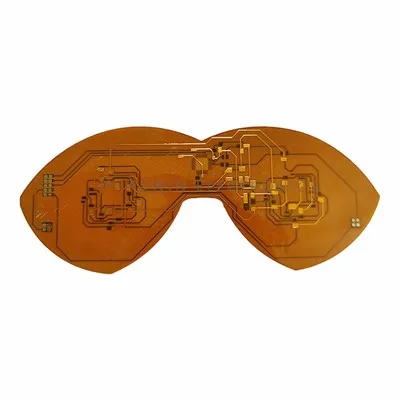
Wait, let’s not forget adaptability. PCB manufacturing isn’t the same as it was 5 or 10 years ago. When I started, we mostly made single or double-sided boards for old radios, now we’re making high-density interconnect (HDI) boards for 5G tech, and flexible PCBs for wearables. A worker who only knows how to run the old through-hole soldering lines will get left behind. We have a training program where every 6 months, workers rotate through 2 different lines—one day on etching, one on stenciling, one on assembly. This year, one of our newer hires, Javi, switched from the through-hole line to the SMT (surface mount) line in 3 months, faster than anyone else, because he asked questions instead of just going through the motions. He now helps train new hires on SMT setup. Adaptability here isn’t just being willing to learn—it’s seeking out opportunities to learn, because this industry changes fast, and if you’re not keeping up, you can’t keep your job.
Also, basic math and troubleshooting skills. Let’s be real, you don’t need a master’s degree, but you do need to do simple fractions and ratios in your head. For example, when mixing solder paste, you need to get the ratio of solder to flux exactly right—off by even 5% and the solder won’t adhere properly. Or when adjusting the exposure machine, you need to calculate how many seconds of light exposure will transfer the circuit design correctly onto the copper board. I’ve had workers who could operate the machine but couldn’t adjust the timing because they struggled with basic division, which meant they couldn’t take on more complex tasks. It’s not advanced math, but if you can’t do that, you’re stuck doing the same low-skill tasks forever.
Now, let’s talk about something a lot of people don’t mention: quality awareness that goes beyond just checking boxes. We don’t just make boards to spec—we make boards that work for the client, even when the client’s spec is vague. For example, a client once asked for a set of PCBs for a drone, but didn’t specify that the boards needed to be heat-resistant for high-altitude flight. A worker on the assembly line noticed that the board’s material (FR-2) would melt at temperatures above 100 degrees, which is way lower than the drone’s expected operating temp. He flagged that, and we worked with the client to switch to a higher-temperature material, saving the client from a huge product failure. That’s not part of the job description, right? But it’s the kind of skill that makes a worker valuable—they’re not just following instructions, they’re thinking about the end product, the client’s needs, and how their work affects both.

At the end of the day, our PCB shop isn’t just a factory line—we’re a team that relies on each other to get orders out on time, correctly, and in a way that keeps our clients happy. The skills I’ve mentioned aren’t just random; they’re the things that separate a worker who’s just punching a clock from someone who’s part of the process. If you’re someone who’s detail-oriented, can solve problems fast, communicates clearly, and wants to learn as the industry grows, we’d love to talk about how you can fit in here. If you’re a procurement manager looking for a reliable PCB manufacturing partner, we’ve got the team, the skills, and the experience to handle your orders—whether they’re small prototype runs or large-volume production. Reach out to us to discuss your project, and let’s make sure your PCBs are made right.
Rigid PCB References:
- International Council on Electronics Manufacturing (iNEMI). (2022). PCB Workforce Skills Gap Report.
- Printed Circuit Board Association (PCBA). (2023). Core Competencies for PCB Production Operators.
- U.S. Bureau of Labor Statistics. (2021). Occupational Outlook Handbook: Electronics Assemblers and Fabricators.
Huaswin Electronics Technology Co., Ltd.
Address: Building A2, Hao Hai Hong Industrial Park, No.3 Yu He Road, Gong He, Sha Jing, Bao An, Shenzhen
E-mail: sales@huaswin.com
WebSite: https://www.huaswin-pcba.com/
