If you’ve ever stood in a warehouse on a sweltering summer day, watching your team drag heavy equipment across concrete while a broken cooling system does little to bring the temperature down, you know how critical industrial mist generators are. For years, I’ve heard customers ask me the same question: “Should I go with a high-pressure mist generator or a low-pressure one?” It’s not a trivial choice—pick the wrong one, and you’ll waste water, deal with constant clogs, or get cooling that only works in a tiny, specific spot. As a supplier who’s installed, serviced, and troubleshooted these systems for 12 years, I’ve seen both work wonders and fail spectacularly. Let’s break down the real differences, so you can choose what’s right for your space. Industrial Mist Generator
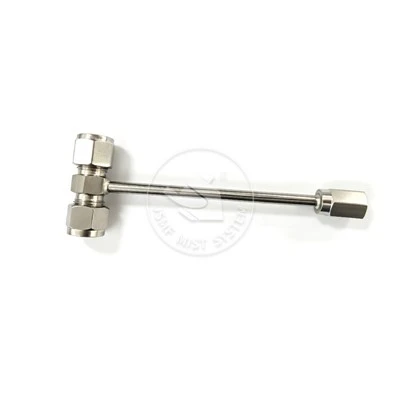
First, let’s start with the basics: what even is an industrial mist generator, anyway? Unlike the cool, gentle mist from a home humidifier, industrial units are built to handle large, open spaces—think manufacturing facilities, agricultural greenhouses, construction sites, or even outdoor event venues. Their core job is to turn water into tiny droplets (usually 10 microns or smaller) that evaporate quickly, pulling heat from the air as they turn to vapor. The pressure that drives those droplets is where high- and low-pressure systems split, and that split changes nearly every part of the system’s performance, cost, and maintenance needs.
Let’s talk about low-pressure mist generators first, since they’re the simpler, more budget-friendly option I see customers gravitate toward for small jobs. Low-pressure systems run between 10 and 50 PSI (pounds per square inch)—for context, your garden hose usually runs around 40–60 PSI, so this is basically just a standard water line with a few add-ons. The nozzles here are larger, too—usually 50 to 100 microns in opening size, which is why they don’t clog as easily. That’s a big win for facilities with water that’s not perfectly filtered, like a small workshop that uses well water. If you’re cooling a 1,000-square-foot warehouse that only gets 10 or 15 degrees too hot, or a greenhouse for young seedlings that can’t handle overly fine mist, low-pressure might work. But here’s the catch with low-pressure: those larger droplets don’t evaporate fast enough. On a 90-degree day, a low-pressure mist will usually only drop the temperature by 5 to 10 degrees, and only right near where the nozzles are pointed. Stand 10 feet away, and you’ll barely feel a difference. Plus, because the nozzles are big, you need a lot more water to make the same amount of mist. I’ve had a customer with a 2,000-square-foot equipment storage shed go with a low-pressure system last year—his water bill went up $120 a month, and his workers were still complaining about heat in the back of the space. That’s the tradeoff for simplicity: lower upfront cost means higher long-term water use and less cooling efficiency.
Now, high-pressure mist generators—these are the workhorses for large, high-heat spaces. They run between 700 and 1,200 PSI, which is like 20 times the pressure of a garden hose. To get that kind of pressure, you need a dedicated pump, not just a tap from the building’s water line. Those pumps are heavier, louder, and more expensive upfront, but they do something game-changing: they turn water into droplets that are 5 to 10 microns in size. That’s tiny—smaller than a single grain of pollen. Those droplets evaporate so fast that they pull heat out of the air before they even hit the ground. A high-pressure system can cool a 10,000-square-foot space by 15 to 25 degrees, even from 20 feet away. I installed a system for a steel fabrication shop last spring—their floor gets up to 110 degrees in the summer, and after we ran the high-pressure mist, their workers’ heat-related complaints dropped by 80%. That’s the real power here: consistent, widespread cooling, even in spaces that have high ceilings or lots of open air.
But high-pressure isn’t perfect, and that’s where customers get tripped up. The tiny nozzles—10 microns or smaller—are way more prone to clogging. If your water has even a little sediment, like calcium or rust from old pipes, those nozzles will get blocked in a week or two. That means you need a whole water filtration system attached to the high-pressure pump, and regular nozzle cleaning or replacement. I had a first-time high-pressure customer last summer who skipped the filter, and he spent three hours a week taking nozzles apart with a needle to unclog them. It was a nightmare for his maintenance team. Also, high-pressure systems use specialized parts: stainless steel piping instead of the cheap plastic you can use for low-pressure, heavy-duty pumps, and electrical wiring that can handle the constant high pressure. Upfront, a high-pressure system for a 5,000-square-foot space can cost two to three times more than a low-pressure one. But here’s the upside: over a year, the water use is 70% less than low-pressure, and the cooling is far more effective. For a customer with a busy warehouse or outdoor construction site where productivity depends on a comfortable temperature, that higher upfront cost pays off fast.
Let’s break down the key differences in a way you can compare, based on what actually matters for industrial use. First, cooling coverage: low-pressure is best for small, enclosed or semi-enclosed spaces (under 2,000 sq ft) with moderate heat. High-pressure is for large, open, or high-heat spaces (over 2,000 sq ft) like manufacturing floors, greenhouses, or outdoor events. Then there’s cooling output: low-pressure gives you 5–10 degree drops, while high-pressure can hit 15–25 degrees, which is the difference between “bearable” and “productive” on a 95-degree day. Water usage is another big one: low-pressure uses 2–3 gallons per minute per nozzle, while high-pressure uses 0.5–1 gallon per minute, so you’re not wasting water on droplets that just fall to the ground and make the space damp. Maintenance: low-pressure needs almost none beyond occasional nozzle checks, while high-pressure needs weekly filter checks, monthly nozzle cleaning, and annual pump servicing. Upfront cost: low-pressure is $1,000–$3,000 for a small system, high-pressure is $3,000–$10,000 for the same size. That’s a huge gap, but it’s not the only number you should look at.
Wait, let’s talk about a common misconception I hear all the time: “I don’t want mist that makes things wet, so I should go high-pressure.” That’s partially true, but not entirely. High-pressure mist does evaporate faster, so you’re less likely to have puddles on the floor or damp equipment. But a poorly designed high-pressure system—too many nozzles, spaced too far apart, or run at too low a pressure—can still leave things damp. Low-pressure mist will almost always make things wet if you’re standing too close, because the droplets are too big to evaporate. So it’s less about pressure and more about how the system is installed. A good supplier will calculate the right number of nozzles, spacing, and pressure based on your space, not just sell you a high-pressure system because it’s more expensive.
Another thing to consider: humidity. If you’re in a space that’s already humid, high-pressure mist might not work as well. Because the air already has a lot of moisture, the droplets can’t evaporate as fast, so you get dampness instead of cooling. In that case, a low-pressure system might actually be better, because it’s designed to handle higher humidity. I had a customer in Florida, where summer humidity is often over 70%, who went with a high-pressure system first—he ended up with a lot of dampness and only a 7-degree cool down. We swapped it for a low-pressure system, and he got a steady 8-degree cool without any wet floors. That’s a perfect example of why you can’t just pick pressure based on size—you have to factor in your location and the space’s natural humidity.
Now, let’s talk about maintenance, because that’s where a lot of customers skip ahead and regret it. Low-pressure systems: if your water is dirty, you might get a few clogs a year, and nozzles are cheap—$5 each, easy to replace. No need for a fancy pump, so if something breaks, it’s usually a simple part you can get at any hardware store. High-pressure systems: the pumps can cost $500 to replace, and nozzles are $15 each, but they last longer if you keep the filter clean. The big thing here is that high-pressure pumps are designed to run 24/7, which is what most industrial spaces need, whereas low-pressure pumps are usually for occasional use. So if your system is running 12 hours a day, a high-pressure pump will last 5–7 years, while a low-pressure pump might only last 2–3. That’s another long-term cost to weigh.
I want to make this practical, so let’s give you a few examples of when each works. If you’re a small business owner with a 1,500-square-foot auto repair shop, where the overhead door is open most of the day, and you’re on a tight budget for installation and maintenance, go low-pressure. It’ll get the job done, keep your techs comfortable, and not break the bank. If you’re a farm with a 5,000-square-foot greenhouse full of heat-sensitive tomatoes, or a construction company working on a job site in Arizona where it hits 105 degrees in the afternoon, go high-pressure. You’ll get the cooling you need to keep workers safe, and you’ll save money on water over the long run. And if you’re somewhere in between—like a 3,000-square-foot warehouse that’s on the larger side but not extreme—talk to a supplier who can assess your space, your water quality, and your budget before you pick one.
A lot of people ask me why I don’t just sell one type, and the answer is simple: there’s no one-size-fits-all. I’ve seen high-pressure systems fail because they were installed in a small, humid space, and low-pressure systems work wonders in a small workshop. The key is matching the system to your specific needs, not just going with what’s trending or what’s more expensive.
If you’re still not sure which is right for you, or you want to get a quote based on your space, feel free to reach out. I’ve helped hundreds of customers across different industries pick the right mist generator, and I’d be happy to walk you through what to look for, what to avoid, and make sure you get a system that works for your budget and your needs. Don’t guess at this—choosing the wrong system can lead to wasted money, frustrated workers, and even safety issues if the space is too hot.
Mist Generator References:
- ASHRAE Handbook—HVAC Applications. American Society of Heating, Refrigerating and Air-Conditioning Engineers. 2023.
- Industrial Humidification and Evaporative Cooling Systems. Occupational Safety and Health Administration (OSHA). 2022.
- “High vs. Low Pressure Mist Systems: Performance and Cost Comparison.” Journal of Industrial and Agricultural Ventilation. Vol. 18, No. 2, 2021.
Jinsheng Mist Forest-High Pressure Mist System
Address: 109 Yonghong Road, Wenjiang District, Chengdu City, Sichuan Province, China
E-mail: 18190767523@163.com
WebSite: https://www.jswsmist.com/
