If you’ve ever held a piece of medical-grade hip implant, a jet engine turbine blade, or even the phone case in your pocket (the tough, scratch-resistant kind, not the flimsy plastic), you’ve interacted with titanium—specifically, titanium ingot, the unassuming starting block that makes all that next-level stuff possible. As someone who’s been supplying titanium ingots for over a decade, I get asked all the time: “How did we go from this weird, reactive metal that nobody could mold to one of the most essential materials of the 21st century?” Let’s break it down, no stuffy textbook jargon, just the real, messy history of making that ingot you probably don’t think about until you need it. Titanium Ingot

First, let’s go way back. You’d think titanium would have been discovered ages ago, right? I mean, it’s the 9th most abundant element in Earth’s crust—more common than nickel or even lead. But here’s the thing: pure titanium doesn’t just sit around in rocks waiting to be picked up. It’s always bonded with oxygen, nitrogen, or other elements, like a drama queen that hates being alone. So when two guys (Cornish clergyman William Gregor and German chemist Martin Heinrich Klaproth) stumbled on it around the same time at the end of the 1700s, they only found titanium dioxide—the white pigment in white paint, sunscreen, and that chalky stuff in makeup. Klaproth named it titanium after the Titans, the mythical strong guys, which makes sense because this metal is basically Titans-level strong, but even he only had a tiny, impure sample.
For the next 150 years, titanium was basically a “why bother?” metal. Yeah, it was strong and light, but trying to get those pesky oxygen and nitrogen molecules out? Impossible with the tools back then. If you heated titanium ore to melt it, it’d just grab more gas from the air and turn into a brittle, useless chunk. Engineers and chemists tinkered, but nothing stuck. Then, in the 1930s, two things happened that changed everything, and neither of them was planned.
First, a Luxembourgish chemist named Wilhelm Kroll was running from the Nazis—he fled to the US in 1940, bringing his research on reactive metals with him. Before he left Europe, he’d been messing with magnesium, which we already use to make other metals pure because it’s super good at stealing oxygen from stuff. Kroll figured: if magnesium can pull oxygen out of titanium ore, maybe we can get pure titanium? That’s the core of what’s now called the Kroll Process, and it’s still the main way we make titanium ingots today—wild that a guy running for his life stumbled on the recipe for a metal that’d power aerospace for 80 years.
Wait, the second thing? World War II. The military needed materials that were strong, light, and didn’t rust, because planes and ships were dying if they used steel that corroded mid-mission. Aluminum was lighter, but not strong enough for jet engines. Steel was too heavy. So the US military threw cash at this random metal everyone’d been ignoring, and suddenly Kroll’s lab had a budget bigger than most small countries. By 1948, the US Bureau of Mines (yes, that was a real thing back then) was cranking out 10 tons of pure titanium ingot a year. By 1957? 20,000 tons. That’s when titanium stopped being a lab toy and became an industrial material.
But making that ingot back then? Total headache. Let me explain, because anyone who’s worked with titanium (or even just bought our ingots) will tell you this part is key. The Kroll Process works like this: first, you take titanium ore (usually rutile or ilmenite) and turn it into titanium tetrachloride, a smelly, corrosive liquid. Then you dump that into a sealed steel tank full of molten magnesium, heat it up to like 1,600°F, and wait. The magnesium steals the chlorine from the titanium tetrachloride, leaving behind a crumbly, grey sponge—think of it like a very dense, titanium-packed foam. That sponge is full of leftover magnesium, magnesium chloride, and tiny air bubbles. So now you have to turn that sponge into a solid ingot.
Back in the 1940s, they did this with something called vacuum arc remelting (VAR). You load the titanium sponge into a big container, heat it in a vacuum chamber (so no air to mess things up), and use an electric arc to melt the sponge at the top. The molten titanium drips down and solidifies at the bottom, forming a big ingot. But early VAR had problems: the ingots were full of little impurities, like leftover magnesium or tiny bits of the tank, which made them brittle. You’d get a customer ordering a 10-ton ingot for a jet engine, and half of it was useless because of a defect. That’s why in the 60s, we added a second remelting step—electron beam remelting (EBR). Instead of an arc, you use a high-powered electron beam to melt the titanium, which is even more precise and gets rid of way more impurities. Suddenly, ingots were way more consistent, and aerospace companies started trusting them for critical parts.
Now, let’s skip to the 80s and 90s, because that’s when titanium ingot production blew up beyond the military and aerospace. The medical industry figured out that titanium is bio-compatible—your body doesn’t reject it, because it forms a thin, stable oxide layer on the surface that doesn’t react with tissue. So hip replacements, knee implants, dental implants? All made from titanium that starts as our ingots. Then the consumer industry got in on it: phones, laptops, watches. People wanted stuff that didn’t scratch, didn’t rust, and was light enough to carry around all day. By the 2000s, titanium ingot demand wasn’t just from planes and ships—it was from every industry you can think of, from golf clubs to wind turbines to electric car parts.
But here’s the thing that nobody tells you about modern titanium ingot production: it’s still way more high-maintenance than steel or aluminum. Steel is cheap, easy to melt, you can just throw scrap into a furnace and go. Titanium? You have to handle it like it’s made of glass and dynamite. Even a tiny speck of dust in the air when you’re remelting the sponge? That can cause a defect in the ingot. Even a tiny bit of leftover magnesium? That makes the whole chunk brittle, so it’s useless for anything other than low-grade parts. That’s why as a supplier, we spend way more time testing our ingots than we do shipping them. Every single batch gets tested for impurities, density, and consistency—because if we send a bad ingot to a customer, that’s a bad part that could make someone’s jet engine fail or a hip implant break in 5 years.
Wait, let’s talk about the myths around titanium ingots, too. Some people think it’s getting cheaper by the year, because more companies are making it. But no—because the core process is still the same as Kroll’s original method. We’ve tweaked it (like using less magnesium, or automating the sponge production, or making remelting faster), but we haven’t invented a totally new way to get pure titanium out of ore. And because titanium is so reactive, every small improvement costs a ton of money. You can’t just build a titanium factory for $10 million like an aluminum mill. A single modern ingot production line costs $100 million+, and you have to run it 24/7 to make it worth it. That’s why there are only a handful of big titanium ingot suppliers in the world—even now, it’s not a commodity like steel.
What about the future? I’ve been in this game long enough to see the shift from military-only to consumer to green energy. Wind turbine blades use titanium for the pitch systems that turn blades to catch wind efficiently. Solar panels? The frames and mounting hardware use titanium because it doesn’t rust in the sun and rain. Electric cars? Tesla and other EV makers are switching to titanium parts because it’s lighter than steel, so the car can go farther on a charge. That means demand is only going up—by 2030, global titanium ingot demand is projected to hit 10 million tons, up from around 7 million now.
But here’s the real, unglamorous part of being a titanium ingot supplier: most people never see the work that goes into each ingot. We’re not making fancy jewelry or cool phone cases—we’re making the starting block for all that stuff. We take raw ore, turn it into a smelly, reactive sponge, melt it in a vacuum, test it for every tiny impurity, and ship it to companies that turn it into something that saves lives (implants), gets people to the moon (space parts), or makes driving more efficient (EV parts).
If you’re reading this, and you need titanium ingot for any project—whether you’re making a medical device, a jet engine, or a custom part for a new industry—here’s what you need to know: we’ve been refining this process for 80 years, we test every batch so you don’t have to, and we can customize ingot sizes, grades, and shapes to fit your exact needs. We’ve worked with small startups and big aerospace companies, so we know how to deliver on time and on budget without cutting corners on quality.
Wait, let’s circle back to that history for a second. From a clergyman finding a weird rock in Cornwall, to a Nazi refugee inventing the process that powers our industry, to us now shipping ingots that are part of the green energy and medical revolutions—titanium’s history is proof that the most important materials are often the ones that nobody cares about until you need them. And as a supplier, I’m proud to be part of that story, one ingot at a time.
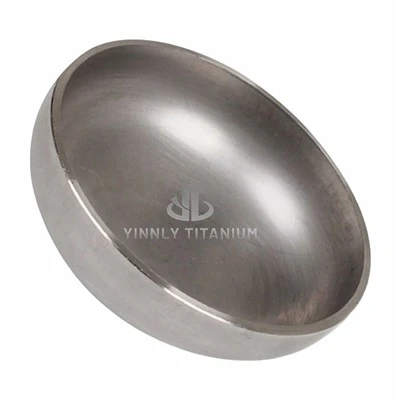
If you’re looking for a reliable, high-quality titanium ingot supplier for your next project, reach out to discuss your requirements and get a tailored quote.
Medical Titanium Wire References:
- Cokely, J. (2019). Titanium: The Metal That Changed the Modern World. Industrial Press Inc.
- Kroll, W.J. (1940). The Extraction of Titanium and Zirconium. Journal of the Electrochemical Society.
- United States Geological Survey. (2022). Titanium Statistics and Information.
- International Titanium Association. (2023). Global Titanium Industry Demand Report.
- Schwartz, M.M. (2003). Titanium: Properties and Applications. John Wiley & Sons.
Baoji Yinnly Titanium Co., Ltd.
Baoji Yinnly Titanium Co., Ltd. is one of the most professional titanium ingot manufacturers and suppliers in China, featured by quality products and good service. Please rest assured to buy bulk titanium ingot in stock here and get quotation from our factory. Customized orders are welcome.
Address: Unit 902, Building 1, Creative Building, No. 195, Gaoxin Avenue, High-tech Zone, Baoji City, Shaanxi Province
E-mail: anna@yinnlyti.com
WebSite: https://www.yinnlyti.com/
